Insista en el espíritu artesano para fabricar sistemas de elaboración de cerveza de alta calidad

Email

sales@micetbrewing.com

Teléfono

+86-531-82979225

WhatsApp

+86 18615260186

Types of distillation

Tipos de destilación

Distillation is a unit process used in chemical industries around the world to separate the components of a mixture. Distillation is the process by which a liquid evaporates and is converted into a vapor which is then condensed and collected in a container. There are three main forms of distillation: fractional distillation, simple distillation, and destructive distillation. Each method serves a different purpose and plays a vital role in extracting the desired substance or purifying the compound.
Table Of Contents
Distillation can be defined as the process of separating components or substances from a mixture using different boiling points or relative volatilities. In other words, the distillation process involves separating one liquid from another by converting a liquid into a vapor and condensing back into liquid form. The distillation process proceeds as follows:
  • A homogeneous mixture containing solids and liquids is heated together in a closed distillation flask.
  • Liquids escape from the distillation flask and form vapors because they are volatile.
  • These vapors are cooled by passing through the condenser.
  • Pure liquid is obtained by the process of condensation in a given container.
  • Non-volatile solids remain as residue.
Types of distillation

Distillation principle

  • Distillation takes place at the boiling point of the solvent. Boiling occurs when the vapor pressure equals atmospheric pressure.
  • When the relative volatility of the liquid is high, the separation effect of the mixture components is better.
  • When heat is applied to a liquid, the vapor boils and then condenses.

Distillation type

Types of distillation include simple distillation, steam distillation, fractional distillation, and vacuum distillation.

simple distillation

Simple distillation can be used when two liquids have different boiling points, or to separate a liquid from a solid or non-volatile mixture. In simple distillation, heating a mixture changes the most important volatile components from liquid to vapor. The vapor rises and enters the condenser. the condenser is cooled (eg, by flowing cold water around it) to promote condensation of the collected vapor.

steam distillation

Steam distillation is used to separate heat-sensitive components. Steam is added to the mixture, causing some of it to evaporate. The vapor is cooled and condensed into two different liquid fractions. Sometimes these fractions are collected , or they will have different density values such that they separate themselves. One example is steam distillation of flowers to produce volatile oils and a water-based distillate.

Fractionation

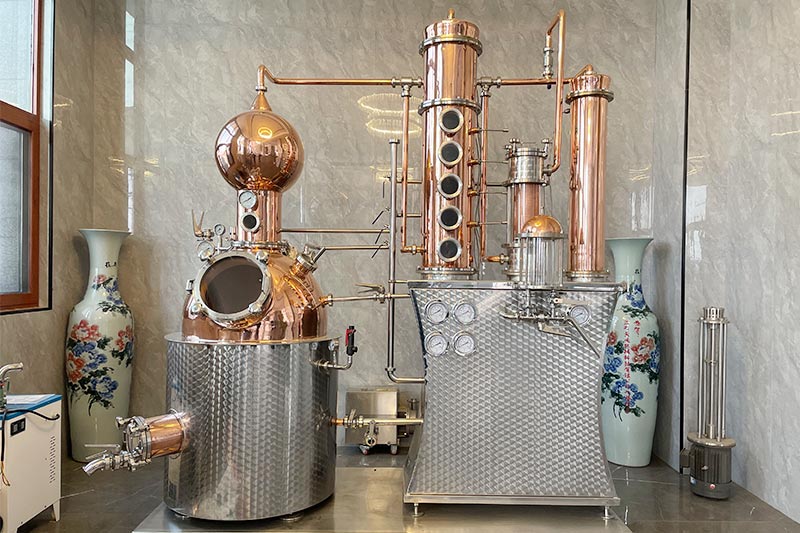
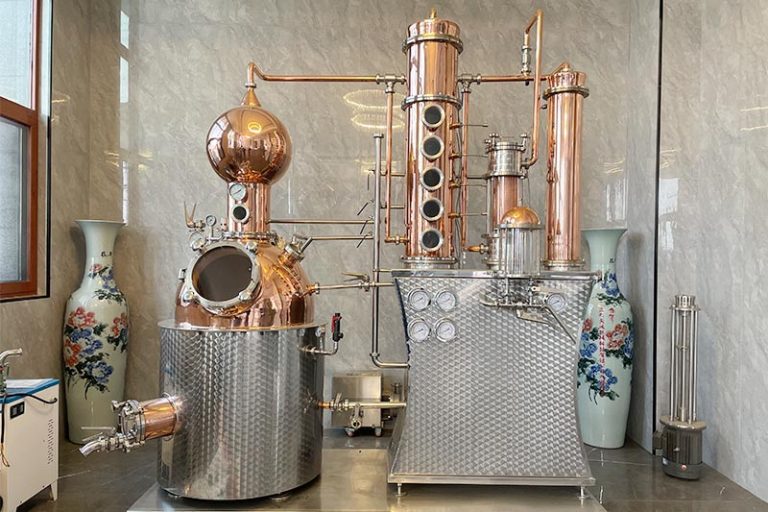
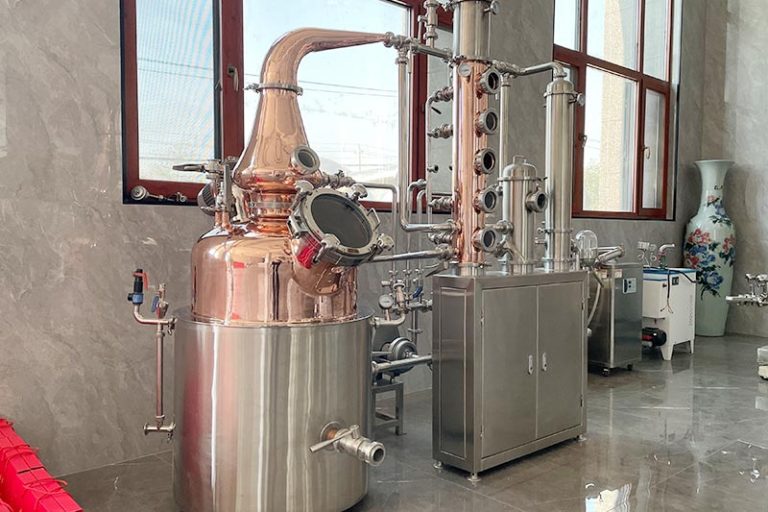
Fractional distillation is used when the boiling points of the components of a mixture are close to each other (determined using Raoult’s law). Fractionating columns separate components through a series of distillations called distillation. In fractional distillation, the mixture is heated and the vapor rises and enters the fractionating column. As the vapor cools, it condenses on the column packing. The heat of the rising vapor causes the liquid to evaporate again, causing it to move along the column, producing a purer sample of the volatile components of the mixture.

vacuum distillation

Vacuum distillation is used to separate high boiling components. Lowering the pressure in the equipment also lowers the boiling point. Otherwise, the method is comparable to other types of distillation. Vacuum distillation is particularly useful when the conventional boiling point exceeds the decomposition temperature of the compound.
What is distillation?

The differences and applications of distillation

The main difference between these distillation methods is their application based on the properties of the mixture. Simple distillation is suitable for mixtures with different boiling points, while fractional distillation is effective for components with closer boiling points. Destructive distillation, but, is used to break down organic materials into useful by-products.

Some applications of distillation:

  • Purification of organic solvents—absolute ethanol (100%).
  • Separate non-volatile substances from volatile substances.
  • Purification of drugs produced using chemical processes.
  • Petroleum product refining – Petroleum ether 60,80.
  • Solvent recovery-synthesis.
  • Remove salt from water to prepare drinking water.
  • Separate methanol or ethanol from water
  • Concentration of oils and beverages in the food industry.
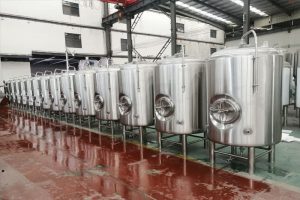
10bbl conical fermenter
Tanque de fermentación

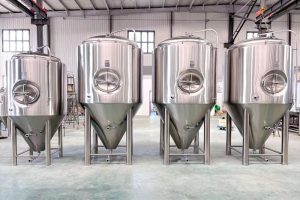
Tanques de fermentación El tanque de fermentación es donde la cerveza lleva a cabo el proceso de fermentación, proporciona un lugar adecuado para las actividades
Read More »
10bbl conical fermenter
Tanque de fermentación

Tanques de fermentación El tanque de fermentación es donde la cerveza lleva a cabo el proceso de fermentación, proporciona un lugar adecuado para las actividades

Read More »
Get a turnkey solution for brewery equipment
If you plan to open or expand the brewery, you can contact Micet Craft directly. Our engineers will design and manufacture brewery equipment according to your brewing process. Of course, we will also provide you with a complete turnkey solution. Also, if you plan to expand the brewery, we will provide you with customized solutions.

Deja un comentario

Tu dirección de correo electrónico no será publicada. Los campos obligatorios están marcados con *

¡Espera! .......

¿Estás listo para poner en marcha tu negocio cervecero?

Somos expertos en equipo para elaborar cerveza y te ofrecemos soluciones a medida para tus necesidades. Tanto si vas a abrir una nueva cervecería como si quieres renovar tu equipo actual, estamos aquí para ayudarte.

Esto es lo que obtendrás si nos eliges:

  1. Soluciones a medida:

    Nuestro equipo de ingenieros diseñará equipos que se ajusten a tus especificaciones exactas, asegurándose de que se adapten perfectamente a tu negocio.

  2. Oferta especial « »:

    . Como agradecimiento por elegirnos, ofrecemos ofertas exclusivas para nuevos clientes. ¡Ponte en contacto con nosotros ahora mismo para saber más!

  3. Consejos de expertos:

    Con más de 16 años de experiencia en el sector, te ofrecemos asesoramiento profesional para ayudarte a poner en marcha o ampliar tu negocio cervecero sin problemas.

Nota: Tu dirección de correo electrónico se mantendrá en la más estricta confidencialidad.