
Choosing the right brewery equipment capacity is one of the most important decisions when starting or expanding a brewery. The correct system should match your expected sales, available space, brewing schedule and future growth.
Many buyers focus only on the size of the brewhouse, such as 500L or 1,000L. However, a complete brewery also needs fermentation tanks, bright beer tanks, cooling equipment, cleaning equipment and a suitable filling or packaging system. If one part of the system is too small, it can limit the output of the whole brewery.
This guide explains how to choose brewery equipment capacity in a clear and practical way. It is written for brewery owners, investors and buyers who may not have an engineering background. The examples are for planning only. The final equipment size should be confirmed according to your beer recipes, production plan, building and local conditions.
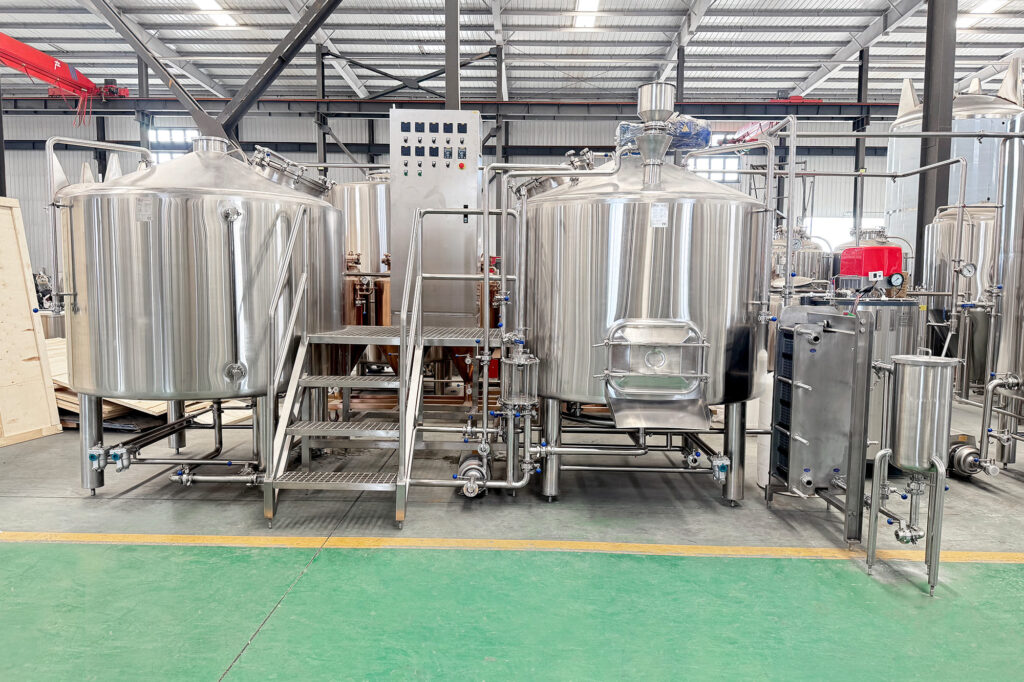
Start with your brewery equipment capacity target
The best way to choose brewery equipment capacity is to start with the amount of beer you expect to sell, rather than with a product catalog.
Consider the following questions:
- How much beer do you expect to sell each month?
- Will you mainly serve beer in a taproom, or will you sell kegs, bottles or cans to restaurants and distributors?
- How many times can your team brew each week?
- Which beer styles will you produce?
- How long will the beer remain in the fermentation tanks?
- Do you expect sales to grow over the next two to five years?
A brewery that mainly serves beer in its own taproom may need a different system from a brewery that supplies restaurants or supermarkets. A brewery producing lager may also need more fermentation space than one producing fast-turnaround ale because the beer may remain in the tanks for a longer period.
You do not need to predict your future sales perfectly. You need a realistic starting plan and a clear idea of which equipment can be added later.
Understand what equipment capacity means
The number in the equipment name is not always the final beer output
When a supplier says “500L brewery equipment,” the 500L may refer to the nominal size of the brewhouse or another vessel. It does not always mean that the brewery will produce 500L of packaged beer every time.
For a clear comparison, ask the manufacturer to explain these three terms:
| Term | Simple explanation |
|---|---|
| Nominal volume | The stated or advertised size of a vessel |
| Working volume | The practical amount of liquid that can be processed in the vessel |
| Packaged beer volume | The amount of beer that remains after fermentation, transfers and packaging |
For example, a fermenter may have a larger total volume than its working volume because it needs space for foam and safe operation. The actual batch size should therefore be confirmed with the equipment manufacturer before you compare different quotations.
The most useful questions to ask are:
- Is the quoted capacity based on total volume or working volume?
- How much wort will be transferred into the fermenter after each brew?
- How many brews can one fermenter receive?
- How much finished beer can be expected after normal production losses?
Using the same definitions makes it much easier to compare suppliers accurately.
Calculate your annual brewery equipment capacity
A simple first calculation for brewery equipment capacity is:
Annual wort volume = wort volume per brew × brews per week × operating weeks per year
To estimate packaged beer:
Estimated packaged beer = annual wort volume × expected production yield
The production yield is the amount of beer remaining after normal losses during fermentation, transfer, conditioning and packaging. It is different for every brewery, so it should be treated as an estimate when planning a new project.
Do not automatically calculate production using 52 full weeks. A brewery may have holidays, maintenance, recipe trials, staff training, cleaning days or periods of lower demand. Using a realistic number of operating weeks will produce a more useful estimate.
Three planning scenarios
It is helpful to prepare three simple scenarios:
- Conservative scenario: lower sales and fewer brewing days during the first stage.
- Base scenario: the most realistic production plan for the business.
- Growth scenario: higher production after adding tanks or increasing brewing days.
These scenarios help you decide what to buy immediately and what can be added later. They are not three separate equipment orders.
Match brewery equipment capacity with fermentation tanks
The brewhouse produces wort, but the beer must spend time in fermentation tanks before it can be packaged or served. This is why the number and size of fermenters are just as important as the brewery equipment capacity.
A simple way to think about the cellar is:
More beer per week + longer fermentation time = more fermentation tank capacity required
For example, a brewery producing four batches per week may need more fermenters if each beer remains in the tank for several weeks. A brewery producing fewer batches may need less cellar space, even if the brewhouse is the same size.
When choosing fermentation tanks, confirm:
- The tank working volume
- The expected batch volume transferred into the tank
- The fermentation and conditioning time
- The number of tanks required for your beer styles
- Temperature-control requirements
- Cleaning connections and access for maintenance
Fermentation tanks are normally selected according to the batch volume, beer style, fermentation time and available cellar space. Their working volume and cooling requirements should be confirmed before finalizing the equipment layout. A supplier’s fermentation tank specifications can then be reviewed against the production plan.
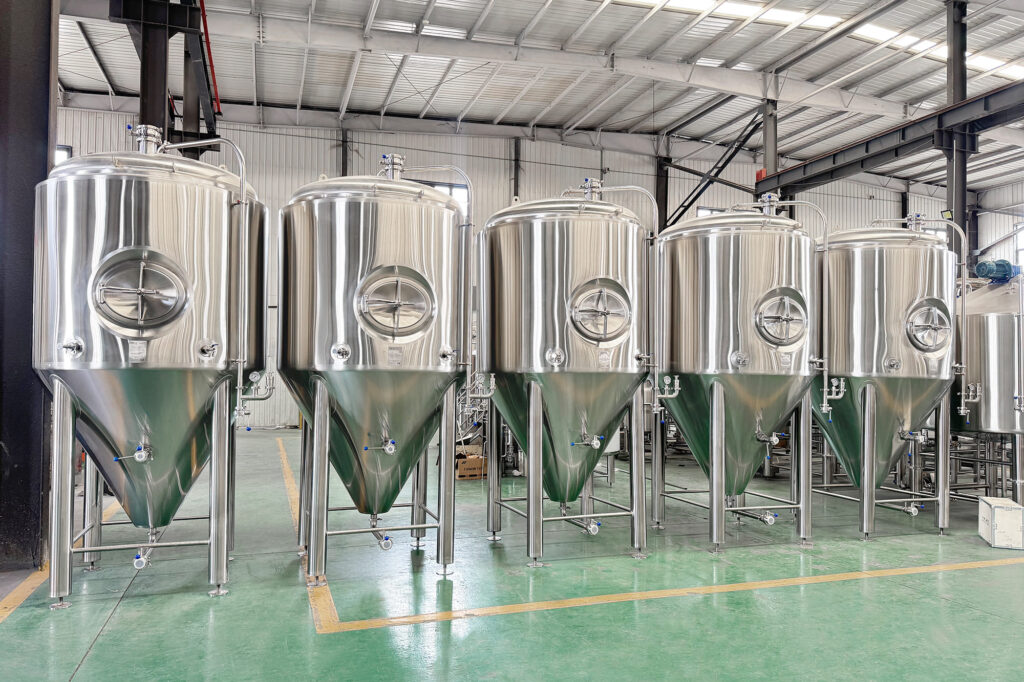
Why beer style matters
Different beer styles occupy the cellar for different periods. A quick-turnaround ale may free a tank sooner than a lager or a beer that needs extended conditioning. If you plan to produce several styles, prepare a simple production calendar showing when each tank will be filled, emptied, cleaned and used again.
This calendar is often more useful than looking only at the total number of liters in the equipment quotation.
Consider bright tanks and packaging
Bright beer tanks are used for beer conditioning, carbonation, holding and preparation before serving or packaging. Their size and quantity should match your sales plan.
For example:
- A taproom-focused brewery may need bright tanks that support regular serving.
- A keg-focused brewery may need enough bright tank capacity for scheduled deliveries.
- A brewery selling bottles or cans must also consider filling speed, packaging days and storage space.
A packaging machine may have a stated maximum speed, but actual output can be lower after allowing for container changes, cleaning, foam control, operator work and labeling. Ask the supplier about the expected operating output for your specific bottle, can or keg format.
Packaging equipment, including a Beer Filling Machine, should be evaluated according to the container format, expected batch size and planned packaging schedule. The important question is not only the machine’s maximum rated speed, but whether its practical operating output can support the brewery’s daily production rhythm.
The key point is simple: do not choose a large brewhouse and assume that the packaging line will automatically keep up. The whole system should be planned together.

Simple brewery equipment capacity examples
The table below uses the same assumptions for each example:
- 45 operating weeks per year
- The listed volume is the wort transferred into fermentation
- An 85% production yield is used only as an example
| Wort per brew | Brews per week | Annual wort volume | Estimated packaged beer at 85% yield |
|---|---|---|---|
| 100L | 3 | 13,500L | 11,475L |
| 500L | 4 | 90,000L | 76,500L |
| 1,000L | 5 | 225,000L | 191,250L |
| 2,000L | 5 | 450,000L | 382,500L |
For example, the 500L scenario is calculated as:
500L × 4 brews × 45 weeks = 90,000L of annual wort volume
If the planning yield is 85%:
90,000L × 85% = 76,500L of estimated packaged beer
These are not guaranteed production figures. The brewery must still have enough fermentation tanks, cooling capacity, labor, cleaning time and packaging capacity to achieve the planned schedule.
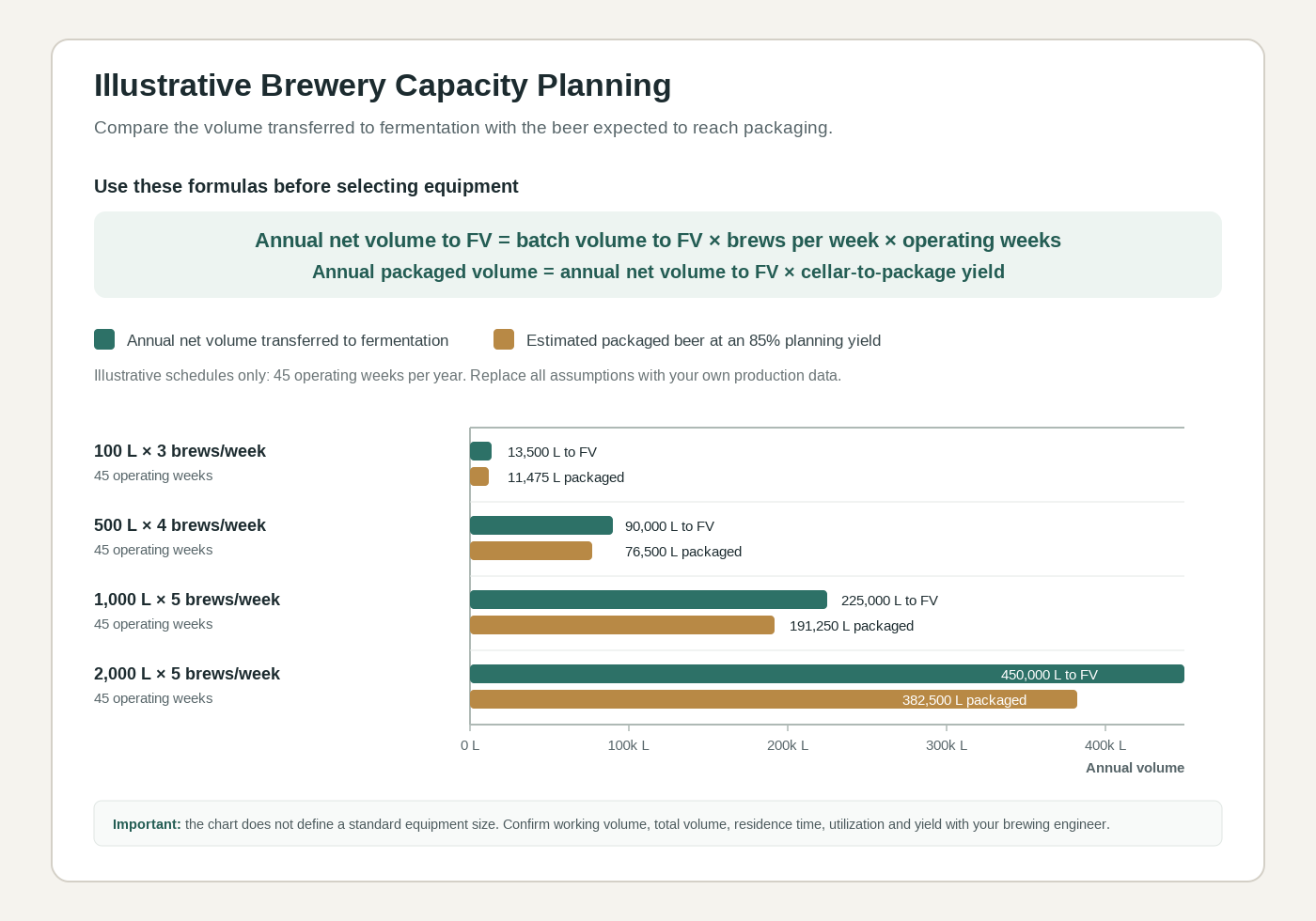
Figure 1. Illustrative capacity examples. Replace the assumptions with your own production plan before making an investment decision.
Note: FV = Fermentation Vessel (the tank where wort is transferred for fermentation).
Other factors that affect equipment selection
Available building space
Before selecting the equipment, measure the building carefully. Check the floor area, ceiling height, doors, drainage, power supply, water supply and the route used to move tanks into the brewery.
A tank may fit on a drawing but be difficult to install if the door or ceiling is too small. There should also be enough space to operate valves, clean the equipment and carry out maintenance.
Heating and cooling
The heating system must support the planned brewing schedule. The cooling system must cool the wort and control the temperature of the fermentation tanks.
The required cooling capacity depends on the number and size of the tanks, the target temperatures, the local climate and the future expansion plan. A larger cellar may require a larger glycol system as well.
Cleaning and sanitation
Cleaning time is part of the production schedule. If the team needs a full day to clean and prepare the system, that time should not be counted as available brewing time.
The equipment plan should include suitable cleaning connections, pumps, spray devices, water supply and drainage. Micet Craft provides brewery project support covering equipment layout, brewing flow diagrams, electrical diagrams, installation and commissioning. Details are available on the Brewery Services page.
Automation and staff
Manual, semi-automatic and automatic systems can all be suitable. The best choice depends on production frequency, labor availability, budget and the team’s experience.
A more automated system may improve consistency, but the operators still need to understand the process and maintain the equipment. The automation level should match the actual needs of the brewery rather than being selected only because it sounds more advanced.
Plan brewery equipment capacity for future growth
If you expect the brewery to grow, you do not always need to purchase every tank at the beginning. A practical approach is to plan the future expansion during the first design stage.
Ask the equipment manufacturer to show:
- Where future fermentation tanks could be installed
- Whether the glycol system can support additional tanks
- Whether the electrical and water supply can be expanded
- Where future pipes, valves and cables would be connected
- Whether the packaging line can be upgraded later
- How new equipment can be moved into the building
This approach can help you avoid buying too much equipment at the start while keeping a clear path for expansion.
What to ask a brewery equipment manufacturer
Before requesting a quotation, prepare the following information:
| Information | Why it is important |
|---|---|
| Target monthly and annual packaged volume | Helps define the overall production goal |
| Wort volume per brew | Helps determine brewhouse and fermenter working volume |
| Planned brews per week | Helps calculate annual production |
| Main beer styles | Helps estimate fermentation time and tank use |
| Bottle, can, keg or mixed packaging | Helps define the filling solution |
| Building size and ceiling height | Helps create a workable layout |
| Power, water and drainage conditions | Helps confirm utility requirements |
| Preferred automation level | Helps match the system to your team and budget |
| Future growth plan | Helps reserve space and connections for expansion |
Also ask the supplier to state clearly what is included in the quotation. This may include tanks, pumps, piping, control systems, cooling, CIP, packaging, installation, training, spare parts and technical documents.
Preparing a Brewery Equipment Proposal
Micet is a commercial brewery equipment manufacturer providing custom brewhouses, fermentation systems and turnkey brewery solutions for customers worldwide.
For a new brewery or an expansion project, Micet can develop a proposal based on your production target, beer styles, budget, building space and future plans. The project support may include brewing flow diagrams, tank drawings, floor plans, electrical diagrams, installation guidance, commissioning and brewer training.
When contacting Micet, provide your expected packaged volume, wort volume per brew, planned brew frequency, beer styles, building dimensions, packaging format and growth plan. This information will help the engineering team recommend a more suitable brewery equipment capacity instead of quoting a single standard size.
FAQ
Q: What brewery equipment capacity is suitable for a new brewery?
A: It depends on your expected sales, brewing frequency, beer styles, fermentation time, building space and future growth. Start with the amount of packaged beer you expect to sell and work backward to the brewhouse and fermentation capacity.
Q: Does 500L brewery equipment produce 500L of packaged beer?
A: Not always. The 500L may refer to the nominal or working volume of the brewhouse. Ask how much wort is transferred into the fermenter and how much packaged beer the system is expected to produce under the proposed schedule.
Q: How many fermentation tanks do I need?
A: The answer depends on the batch volume, fermentation time, beer styles, cleaning time and production schedule. A simple tank calendar can show when each tank is full, empty, cleaned and ready for the next batch.
Q: Should fermentation tanks have the same capacity as the brewhouse?
A: Their working volume should match the amount of wort transferred from the brewhouse, but the total vessel volume may be larger. Always compare working volume and transfer volume, not only the product name.
Q: What is the most common capacity-planning mistake?
A: Many buyers choose the brewhouse first and consider the rest of the system later. Fermentation tanks, cooling, cleaning and packaging may then become bottlenecks. The complete production flow should be planned together.
Q: Should I plan for future expansion?
A: Yes, if growth is part of your business plan. Even when you do not buy additional tanks immediately, reserve suitable space and consider future glycol, electrical, water, drainage and piping requirements.