
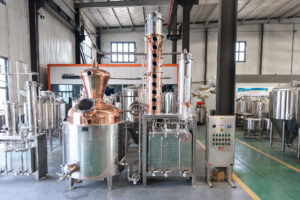
Pot Still vs Column Still: Choosing the Right Distillation System for Commercial Spirit Production
Pot still vs column still is a key equipment decision for commercial spirit production. This guide compares batch flexibility, spirit character, separation efficiency, capacity, alcohol recovery, utilities, and installation requirements to help distilleries choose between a pot still, column still, or hybrid distillation system.
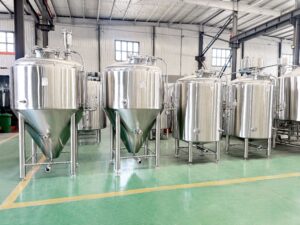
Bright Tank vs Fermentation Tank: When Do You Need Both?
Choosing between a Bright Tank vs Fermentation Tank affects beer quality, tank turnover, packaging flexibility, and brewery capacity. Although both are sanitary stainless steel vessels, they serve different stages of production. This guide explains how fermentation cycles, working volume, carbonation, cleaning, and packaging schedules determine whether a brewery needs one vessel type or both.
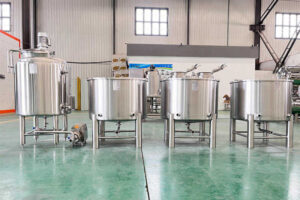
Kombucha Brewing Vessel: How to Brew Kombucha Beyond the Glass Jar and Scale Batch or Continuous Brew Production
A small jar may work when you first brew kombucha, but commercial growth changes everything. More orders mean more batches, more cleaning, more transfers, and more chances for inconsistent fermentation. The wrong vessel can quickly become the bottleneck that limits production. A kombucha brewing vessel is the container where sweetened tea, starter liquid, and a
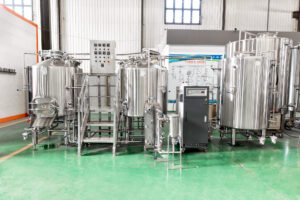
Beer Brewing Tanks for Sale: RFQ Checklist for Fermenters, Brite Tanks, and Brewery Equipment
Finding beer brewing tanks for sale is easy. Comparing them correctly is harder. Two tanks may look almost identical online, yet differ in cooling area, pressure design, fittings, weld quality, cleaning access, and usable volume. A vague RFQ can turn a low quotation into an expensive brewery problem. For commercial buyers, the best brewing tanks
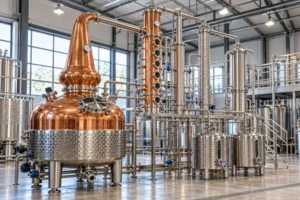
What Equipment Is Needed for Distillation? A Complete Distillation Equipment Guide
Choosing the wrong distillation equipment can limit output, waste energy, reduce product consistency, and create safety problems. The challenge becomes greater when a project moves from a small laboratory setup to commercial production. The solution is to match every piece of equipment to the liquid, production capacity, target purity, and distillation method. A complete distillation
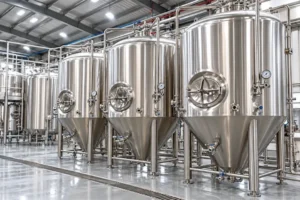
What Are the Main Types of Fermenters? Fermentation & Bioreactor Guide
Choosing the wrong fermenter can lead to poor temperature control, contamination, uneven fermentation, wasted energy, and limited production capacity. These problems become more serious as production grows. The solution is to match the fermenter design with the microorganism, product, fermentation process, batch size, and future production plan. The main types of fermenters include stirred-tank fermenters,

How to Choose the Right Brewery Equipment Capacity for Your Business
Learn how to choose brewery equipment capacity by matching sales demand, brew frequency, fermentation tanks, packaging needs, space and future growth.

How to Sanitize Beer Brewing Equipment? A Complete Guide to Cleaning and Sanitation
Poor sanitation can ruin an entire batch of beer even when you use excellent ingredients and a good recipe. Bacteria, wild yeast, and leftover residue can change flavor and reduce consistency. Learning how to properly clean and sanitize brew equipment is one of the most important skills for every brewer. To sanitize beer brewing equipment,

What Is the Equipment for Distillation? A Complete Guide to Distillation Equipment and Apparatus
Choosing the right distillation equipment can directly affect product purity, energy use, and production efficiency. Many beverage producers, distilleries, and industrial users understand the distillation process but are unsure which apparatus they actually need. The wrong setup can create quality issues and unnecessary investment. Distillation equipment includes heating vessels, boiling flasks, condensers, collection vessels, columns,

Beer Brewing Fermenter vs Conical Fermenter: What to Know
Nancy Shang | Founder & CEO, MICET | Published September 18, 2026 “Conical fermenter” describes the cone-bottomed shape most craft breweries use; “cylindrical” or flat-bottom tanks skip the cone. The shape changes yeast harvesting, sediment removal, and floor footprint — but it matters less than batch size and cleaning workflow for most new breweries. Tank