
1) What is a beer can filling machine and how does it differ from a bottle line?
A filling machine for beer cans moves each can through rinse (or purge), main filling under the chosen filling technology, lid application, and seaming. In a modern monobloc, the filler and seamer sit together to shorten paths and control oxygen.
Bottle lines aim to close crowns or screw caps; canning needs a perfect seam. The engineering is different: lids, chuck rolls, and seam tightness matter more than neck finishes. Good systems precisely fill while limiting foam and oxygen during the filling process. Brewers who demand high precision filling choose designs that deliver accurate filling with good stability.
“Keep the path short, purge well, and watch the seam—flavor survives the line that respects it.”
2) How does counter pressure work for carbonated beverage and why does it protect flavor?
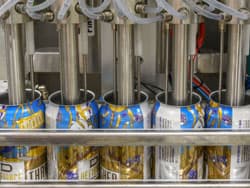
Counter pressure (isobaric) filling keeps CO₂ pressure inside the can near product pressure, reducing breakout and foaming. The filler first pressurizes with CO₂, opens the valve, and vents at a controlled rate so flow is calm. This method is used widely for carbonated beverage like carbonated soft drink and beer to reduce oxygen pickup and keep carbonation targets stable.
The Brewers Association stresses monitoring dissolved oxygen (DO) throughout packaging; low DO improves stability and shelf life. Combine pressure-balanced filling with CO₂ purges and tight seaming checks for best results.
3) Choosing the right filling machine for craft beer and other drinks: key specs to compare
Start with product type: non-carbonated juice, craft beer, carbonated soft drink, kombucha, or RTD cocktails. Each liquid has different foam behavior, temperature needs, and target volumes of carbonate. Your production requirements also include space, utilities, and production needs for near-term demand.
Compare these essentials:
- Throughput (rated cans per unit time), turret size, and number of filling head positions
- Filling systems (gravity, isobaric, volumetric, piston cylinder) and valve design for free-flowing or semi-viscous liquid products
- Seaming machine specs, lid format, and changeover parts for different round cans
- Materials (stainless wet parts; aluminium lids), cleanability, and pneumatic components quality
- Controls (HMI, plc and control system, sensors), safety guarding, and recipe memory
As Brewing Equipment Manufacturing specialists, we design tailor-made layouts that handle a wide range of SKUs with wide adaptability yet remain simple for teams to run day-to-day.
4) What throughput do I really need—cans per minute vs cans per hour explained
Vendors quote speed in cans per minute (CPM) or cans per hour (CPH). Entry modules may run 12–45 CPM; mid lines 40–120 CPM; large systems far higher. For reference, reputable craft suppliers publish ranges like 14 CPM for entry units and 40–45 CPM for small multi-head systems, depending on product, temperature, and operator skill.
To plan labor and tank turns, convert both ways and include downtime. A simple table helps:
| Rated Speed | Shift Output | Notes |
| 30 cans per minute | 14,400 cans per hour (theoretical) | Real output varies with changeovers & QC |
| 45 CPM | 21,600 CPH | Often ideal for craft beer in small plants |
| 90 CPM | 43,200 CPH | Suits regional distribution |
Remember, actual production speed depends on recipe, carbonation level, and lid feed—plus how dialed-in your operators are.
5) Aluminum can filling machine vs glass: seams, oxygen, and shelf life
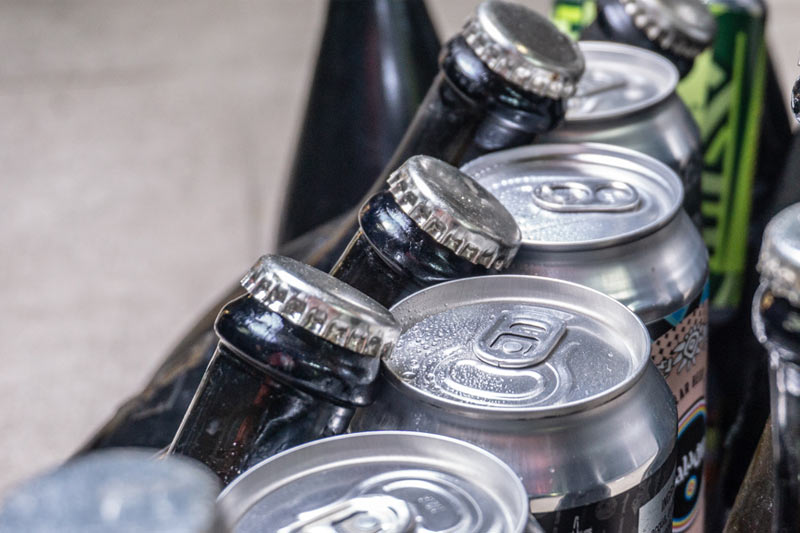
An aluminum can filling machine protects liquid from light and oxygen while offering fast heat transfer, low weight, and easy recycling. With cans, the double seam is your closure. FDA guidance for canned foods highlights visual inspection for gross seam defects by qualified staff at regular intervals; similar discipline benefits beverage lines too.
Seam teardown and measurement remain your go-to QC, using industry charts to verify body hook, cover hook, and overlap. These practices come from long-standing double-seam references in food packaging.
Glass excels for certain brands, but filling cans often wins for portability and shelf stability in beer and RTDs.
6) Inside the monobloc: filling and seaming in one frame for compact production line layouts
A monobloc integrates the filler and seamer on one base. That short path reduces oxygen and drip points and simplifies guarding. Many craft-scale systems offer a compact production line footprint with depalletizer, rinser/purge, filling machine, lid placement, filling and seaming turret, date coder, and packing machine downstream.
For sites exploring an upgrade, look at filling and seaming machine options with recipe memory in the HMI, clean frames, and tool-less fine-tuning. Paired carefully, you achieve complete filling with minimal rejects and easier sanitation.
7) Non-carbonated and hot filling: valves, piston options, and solid and liquid handling
For still drinks (tea, coffee, juice), a liquid filling machine can use gravity or volumetric valves. Where viscosity rises or particulates appear, piston metering offers accurate filling for solid and liquid mixes. A filler machine with a piston cylinder dose gives stable repeatability across cups, pouches, and can formats.
In hot filling applications, choose elastomers and seals rated for FDA “conditions of use,” such as “hot filled or pasteurized above 150°F” or “below 150°F.” Your process authority will confirm targets for time and temperature.
If you also run carbonated SKUs, specify change-part kits so the same frame can adapt—protecting CAPEX while meeting mixed production requirements.
8) Quality control for the seam: tools, checks, and records every brewer should keep
The seam holds everything together. Inspect lids, monitor lifter pressure, and measure countersink. Perform regular cut-and-teardowns, logging values to track drift. FDA resources for low-acid foods spell out the spirit: routine visual checks catch sharp seams, droops, false seams, and other closure defects—principles that map well to beverage cans.
Brewers Association packaging materials also stress oxygen control during packaging—review them as part of operator training and SOPs.
9) Cleaning, changeovers, and everyday filling operations that boost operational efficiency
Set a standard CIP with verified flow and temperature. Sanitize before first fill and after long stops. In changeovers, swap lid lanes and height columns, clear horizontal can runs, verify recipe number in the HMI, and purge with CO₂.
Small habits raise operational efficiency: confirm purge times, watch DO at discharge, and log hold-ups. Keep spares: belts, sensors, and pneumatic components. A best-practice routine reduces micro-stops and stabilizes efficiency and high-speed throughput.
10) When to scale to high-speed lines and what automation pays back fastest
Upgrade when overtime climbs and tank turns stall. High-speed frames bring more heads, faster indexing, servo drive system moves, and vision sensors. Smart automation—from auto-lubrication to lid inspection—cuts labor while raising quality. Consider upstream depalletizers and downstream case packers; “little” automations often deliver the fastest ROI.
If you sell through wholesalers, plan for seasonal peaks. A right-sized filling solution gives resilience without over-buying.
11) Budgeting your project: total cost, utilities, drive system, plc control system, and HMI
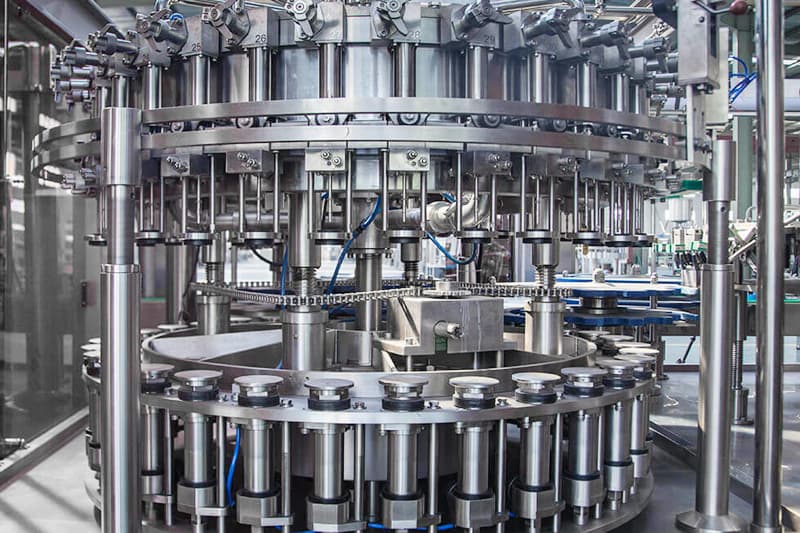
Beyond the sticker price, include utilities (air, CO₂, power, water), parts, training, and maintenance. Controls matter: choose a readable HMI with alarm history, guided setups, and ethernet diagnostics. A plc control system simplifies recipe management and service support, while a single mention of a general plc helps new techs anchor the concept.
Ask about control system remote access, e-stops, guarding, and interlocks. For multi-format work, insist on digital guides and scales so operators hit the same setup every time.
12) Real-world case study: a small beer canning line growing from taproom runs to retail
Starting point. A startup launched with a two-head beer filling machine rated at 18 CPM. Early weeks focused on SOPs, CO₂ purges, and seaming machine checks.
Scale-up. Demand grew—local grocers wanted 12-packs. The team moved to a compact monobloc with four heads, recipe memory, and auto lid feed. Throughput rose to 42 CPM (average), waste dropped below 1.5%, and DO improved after better purges (per guidance from industry packaging resources).
Now. With steady volume, they plan an automatic aluminum depalletizer and inline checkweigher to support distribution and QA.
Comparison Table: which filling systems fit which products?
| Product Type | Best Valve/Method | Oxygen/Carbonation Notes | Why it fits |
| Beer (carbonate 2.3–2.7 vols) | Counter pressure isobaric | Low DO critical; pressure control prevents foam | Protects flavor, keeps CO₂ in |
| Kombucha (lightly carbonate) | Counter-pressure or balanced gravity with purge | Watch live culture and foam | Gentle flow + purge |
| Seltzer/carbonated soft drink | Counter-pressure | CO₂ retention and quick lids | Tight tolerances |
| Cold brew (still) | Gravity or piston dose | Avoid air; chill helps | Smooth liquid filling |
| Viscous smoothies (semi-viscous) | Piston cylinder | May need bigger valves | Repeatable volume |
Controls and usability: what operators touch every day
Look for a clean HMI with guided steps, photos, and tool-lists. Good software reduces training time and mistakes. If you run multiple SKUs, recipe-based setpoints standardize purge time, fill height, and filling head lift speeds.
Modern frames include alarms for lid feed, low CO₂, and vacuum faults. They also make it easy to export run data for maintenance reviews and continuous improvement.
Formats, frames, and flexible layouts for wide adaptability
If you ship RTDs and beer, a versatile frame handle a wide range of lids and sizes. Change-parts give wide adaptability to 12- and 16-oz round cans, slim energy formats, or specialty volumes. For plants tight on space, a monobloc reduces conveyors; for larger rooms, modular blocks let you add filling and packaging gear later.
When you want to customize, ask for rails and clearance for future modules, from labelers to pasteurizers.
Specialty capabilities you might need (today or tomorrow)
- Filling machine for sale options that support both counter-pressure and atmospheric modes
- Filling systems able to switch among still, lightly carbonated, or highly carbonated drinks
- Liquid filling machine with jacketed product paths for precise temperature control
- “Straight double head filling” lab units for pilots and test batches
- Volumetric tooling for quantitative filling of granular products in adjunct lines
- Hygienic materials and state-of-the-art guarding for the packaging industry
A quick glossary for your team
- Canning machine / canning line – colloquial for filler + seamer + conveyors + support modules (a full filling and seaming machine).
- Filling head – the valve/nozzle that meters liquid into each can.
- Seam – formed by rolls curling the lid and body together for a gas-tight closure.
- HMI – touchscreen interface to set recipes and view status.
- Drive system – motors/servos that index and move turrets.
Buyer guidance from a filling machine manufacturer
As a global filling machine manufacturer serving a wide range of industries, we publish a machine catalog with frames sized for small taprooms to regional plants. For newcomers, we recommend a staged approach: start with a compact filling machine that fits today’s volume; plan utilities and frame doors for tomorrow.
If your beverage scope includes seltzer, tea, cocktails, and craft beer, ask for innovative solutions with recipe libraries and purge profiles. These make automation upgrades smoother and raise reliability over time.
Specs checklist (save this)
Frame & heads
- Number of heads and turret size for efficiency and high-speed output
- Adaptability kits for multiple can sizes
- Materials and surface finish; sanitary design
Process
- CO₂ purge volume and timing for low DO
- Balance of pressure and venting (filling beverage safely)
- Verified filling technology (isobaric, gravity, piston) for your SKUs
Controls
- PLC brand, IO, recipes; HMI language support
- Safety: guarding, e-stops, lockout points
- Remote diagnostics and spare parts
Utilities
- Air consumption, CO₂ supply, power, water
- Environmental limits and good stability across shifts
Example line layouts (text schematic)
Compact Taproom (up to 45 CPM)
Depalletizer → Rinse/Purge → Filling machine → Lid Place → Seaming machine → Date Code → Pack
Regional Plant (90+ CPM)
Depalletizer → Rinse/Purge → Monobloc filling and seaming → Pasteurizer → Inspector → Case Packer/Palettizer
Frequently Asked Questions
What’s the difference between atmospheric and counter-pressure can filling?
Atmospheric filling relies on gravity/low pressure and suits non-carbonated drinks; counter pressure maintains CO₂ pressure inside the can so fizzy products don’t foam out. It’s the standard for beer and seltzer.
How do I estimate the right line size?
Work backward from weekly volume and peak days. Convert to cans per hour and add 15–25% for downtime, changeovers, and QC. Use vendor speed charts and talk to peers with similar SKUs.
What QC tools do I need for seaming?
At minimum: feeler gauges, micrometers, countersink tools, lifter pressure gauges, and a teardown kit—plus SOPs referencing double-seam dimensions and visual defect checks.
Will one line handle juice and beer?
Yes, with the right valves, seals, and change-parts. For hot filling, confirm materials meet FDA “conditions of use.” Sanitation and allergen control steps must be documented.
What speeds are realistic for small craft systems?
Published ranges show ~14 CPM for entry units and 40–45 CPM for compact multi-head modules. Real results depend on recipes, operators, and setup.
Where can I learn more about oxygen control?
The Brewers Association resource hub offers talks and articles on DO sampling and packaging best practices.
Short case study (numbers you can use)
- Startup launched with a two-head isobaric module: 18 CPM average.
- After SOPs and seam training, DO at discharge dropped by ~30% (per their meter logs informed by BA guidance).
- Upgraded to a monobloc; throughput rose to 42 CPM with the same crew.
- Utilities held steady thanks to servo drive system tuning in the HMI.
Final buying notes (phrases and features to request in proposals)
- Space-saving monobloc or modular frames
- Recipe memory, guided changeovers, and alarm histories in the HMI
- CO₂ purge control and lid feed monitoring
- Hygienic design fit for beverage HACCP plans
- Clear lead times, training, and service SLAs
Sources & further reading
- Brewers Association – Packaging Resource Hub; dissolved oxygen sampling & seminars.
- FDA – Conditions of Use for food-contact materials; seam inspection guidance for low-acid canned foods (principles relevant to beverage closures).
- Wild Goose Filling – published product speed examples for craft-scale canning systems.
- Industry overview of counter-pressure filling.
Bullet-point summary (remember these)
- Match the filling machine to your product’s foam and carbonate profile.
- Right-size throughput by converting both cans per minute and cans per hour.
- Use counter pressure for fizzy products; verify seams every run.
- Favor monobloc layouts for compact plants; modular blocks for growth.
- Specify strong controls: HMI, recipes, alarms, plc control system.
- Plan QC—oxygen, seam checks, and sanitation—before your first can.
- Budget for change-parts, training, and spares; these protect uptime.
- Ask for tailor-made layouts and innovative solutions to fit real production needs.