
Choosing between counter-pressure and atmospheric filling affects beer quality, carbonation retention, oxygen pickup, packaging speed, and shelf life. The right method depends on the beer style, carbonation level, container, distribution distance, production volume, and available budget. These factors should be evaluated together when selecting beer filling equipment.
Counter-pressure filling transfers carbonated beer into a container that has been purged and pressurized before filling. Atmospheric filling transfers beer into a container at or near atmospheric pressure. Neither method is automatically right for every brewery. The important question is whether the filling process can protect the product while meeting the brewery’s production and packaging requirements.

Counter-Pressure and Atmospheric Filling: The Short Answer
Counter-pressure filling is generally better suited to carbonated beer that will be stored or distributed for longer periods. By reducing the pressure difference between the beer and the container, it can help limit foaming, retain carbon dioxide, and reduce air exposure when the system is correctly operated.
Atmospheric filling can be practical for small breweries, taproom sales, short local distribution, and products consumed soon after packaging. It usually has a simpler process and lower initial complexity, but it requires careful control of beer temperature, flow rate, foam, headspace, and closure quality.
The decision should therefore be based on total packaging performance rather than the purchase price of the filling machine alone.
How Counter-Pressure Filling Works
A counter-pressure filling machine seals the container and prepares it for pressure-controlled transfer. The container may be rinsed, purged with carbon dioxide, and pressurized to reduce the pressure difference before beer enters. After filling, the pressure is released in a controlled sequence before the container is capped or seamed.
A typical process includes container positioning, carbon dioxide purging, pressurization, beer filling, controlled pressure release, and closure. The exact sequence varies by machine design and package format.
This method is useful for carbonated beer because it reduces the sudden pressure drop that can release dissolved carbon dioxide and create excessive foam. However, a counter-pressure filler is not a complete oxygen-control solution by itself. Beer temperature, Bright Tank pressure, transfer lines, valves, seals, gas quality, and closure equipment all influence the final result.
How Atmospheric Filling Works
An atmospheric filler transfers beer into a container that remains at or near atmospheric pressure. The beer flows through a filling valve, after which the container is capped, crowned, or seamed.
The equipment can be easier to operate and maintain, making it suitable for smaller packaging lines. However, carbonated beer may foam more when it enters a container at atmospheric pressure. The brewery may need colder beer, lower and more stable flow, suitable filling tubes, effective foam control, and a short distance between filling and closing.
Atmospheric filling is not automatically unsuitable for beer. It can perform adequately when the beer is packaged close to the brewery, consumed quickly, and filled under controlled conditions. It becomes less suitable when the product requires long shelf life, wide distribution, or highly consistent dissolved oxygen performance.
Key Differences Between the Two Methods
| Comparison Point | Counter-Pressure Filling | Atmospheric Filling |
|---|---|---|
| Filling environment | Container is purged and pressurized before filling | Container remains at or near atmospheric pressure |
| Main advantage | Better control of pressure, carbonation, and air exposure | Simpler equipment and operation |
| Best suited for | Carbonated beer with longer storage or distribution needs | Taproom sales, local delivery, and short storage periods |
| Foaming risk | Lower when pressure and temperature are balanced | More sensitive to pressure drop and flow conditions |
| Equipment complexity | Higher because of gas circuits and pressure controls | Generally lower |
| Initial investment | Usually higher | Usually lower |
| Main operating requirements | Stable CO2 supply, pressure control, and trained operators | Stable temperature, flow, foam, and closure control |
| Typical quality priority | Carbonation retention, shelf life, and low oxygen pickup | Simpler packaging and lower operating complexity |
Actual results depend on filler design, beer temperature, carbonation level, container geometry, closure method, and operator settings. The table should be used as a planning guide rather than a substitute for a process evaluation.
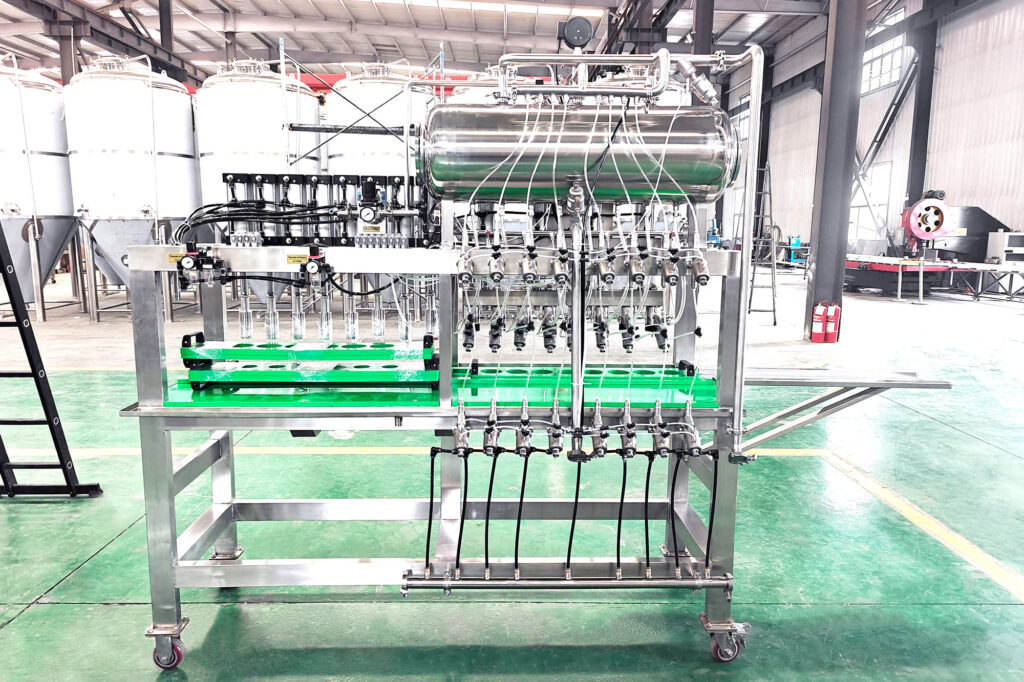
Beer Style, Carbonation, and Package Format
Carbonation level is one of the first technical factors to review. Highly carbonated beer is more sensitive to temperature changes and pressure differences. Beer leaving the Bright Tank should remain cold and stable during transfer. If the beer warms or enters a container too quickly, carbon dioxide can break out of solution and cause foam, product loss, and unstable fill levels.
Counter-pressure filling is often considered for bottled or canned beer that will be distributed regionally or internationally, premium products with a defined shelf-life target, and beers where carbonation retention is important. Atmospheric filling may be suitable for moderate-carbonation products, small batches, local sales, or beer that will be consumed soon after packaging.
The container also matters. Glass bottles may benefit from purging and pressure-controlled filling. Cans require a compatible filler and seamer, with additional attention to fill height, foam, lid placement, and seam quality. Keg filling uses a different connection and cleaning procedure, but the same principles apply: sanitation, oxygen control, and stable pressure during transfer.
Before choosing a beer filling machine, confirm the container material, volume, opening design, carbonation target, beer temperature, closure type, required packages per hour, and changeover time.
Oxygen Pickup and Shelf Life
Oxygen can enter beer during transfer, filling, foaming, headspace formation, closure, and package handling. A brewery may achieve good beer quality in the Bright Tank and still shorten shelf life during packaging if the filler or closure process introduces excessive air.
Counter-pressure filling can reduce this risk through container purging and controlled pressure transfer. The brewery should still evaluate the complete cold-side packaging path, including:
- Bright Tank pressure and beer temperature;
- Transfer hose length, diameter, and pump selection;
- Carbon dioxide purge time and gas quality;
- Filling-valve design and flow stability;
- Foam and headspace management;
- Cap, crown, or can-seam quality;
- Storage temperature after filling.
The filling machine should be treated as one part of a low oxygen beer packaging system. Good results require compatible tanks, pipes, gas circuits, closures, cleaning procedures, and operator training.
A Practical Packaging Capacity Calculation
Filler capacity should be based on container volume, filling heads, cycle time, changeover, cleaning, and realistic operating efficiency.
Assume a brewery has 1,000 L of beer and packages it into 330 mL bottles. The theoretical quantity is:
1,000 L ÷ 0.33 L = approximately 3,030 bottles
Allowing 2% for transfer, filling, and handling losses gives:
3,030 × 98% = approximately 2,969 filled bottles
If a four-head bottle filling machine completes one cycle every 20 seconds, its theoretical rate is:
4 bottles × 3 cycles per minute = 12 bottles per minute
The theoretical filling time is therefore:
2,969 ÷ 12 = approximately 247 minutes
This figure excludes rinsing, cap placement, inspection, changeover, cleaning, pauses, and downstream packing. A practical production plan should apply an efficiency factor and confirm that the capper, labeler, and case-packing equipment can match the filler. The same principle applies to a can filling machine, although seaming requirements must also be included.
Cost, Maintenance, and Operating Complexity
Atmospheric filling usually requires fewer pressure-control components and may be easier for a small team to learn. This can reduce installation and maintenance complexity, but lower equipment cost does not guarantee lower total operating cost. Foam, product loss, unstable fill levels, or short shelf life can reduce the amount of saleable beer.
Counter-pressure filling normally includes gas circuits, regulators, valves, sensors, seals, and a controlled pressure-release sequence. It may require more operator training and maintenance, but it can provide better process control for carbonated beer and longer distribution routes.
When comparing quotations, review carbon dioxide and compressed-air consumption, electrical power, spare parts, cleaning time, changeover time, maintenance access, filling accuracy, product loss, and expected packaged output. Ask whether the stated capacity is a theoretical filling speed or a practical line output after normal interruptions.
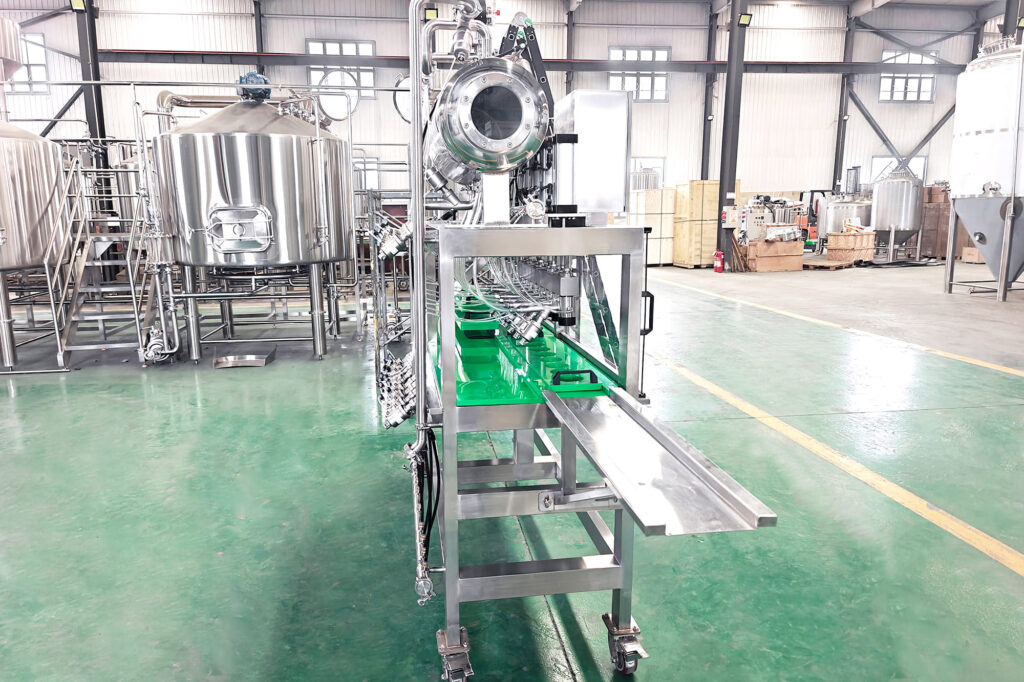
How to Choose the Right Method
| Brewery Requirement | More Suitable Method | Main Reason |
|---|---|---|
| Carbonated beer for regional or export distribution | Counter-pressure filling | Better support for carbonation retention and oxygen control |
| Premium bottled beer with a defined shelf life | Counter-pressure filling | Allows container purging and controlled pressure transfer |
| Small taproom packaging runs | Atmospheric or entry-level counter-pressure filling | Lower complexity may be sufficient for short storage periods |
| Limited initial budget and local sales | Atmospheric filling may be suitable | Simpler installation and lower initial equipment complexity |
| High production volume | Counter-pressure or dedicated automated system | Better potential for process control and line integration |
| Frequent changes between package formats | Depends on filler design | Tooling and changeover time may be more important than filling principle |
A brewery should choose counter-pressure filling when product protection, carbonation stability, and distribution life justify the additional equipment and operating requirements. Atmospheric filling may be the better practical option when the brewery has a small output, short delivery route, and simple packaging workflow.
What to Confirm in a Filler Quotation
Before purchasing beer packaging equipment, ask the supplier to define:
- Filling method and operating pressure;
- Rated and practical output in bottles or cans per hour;
- Supported container sizes and changeover parts;
- Beer temperature and carbonation assumptions;
- Filling accuracy and expected product loss;
- Carbon dioxide and compressed-air consumption;
- Number of filling heads;
- Rinsing, purging, capping, or seaming functions;
- Cleaning procedure for product-contact parts;
- Materials, seals, valves, and replacement parts;
- Electrical requirements and control-panel functions;
- Operator requirements and safety features.
The quotation should also explain how the machine is tested and how practical output is calculated. A line rated at 1,000 containers per hour may produce less after changeovers, inspections, cleaning, and downstream handling are included.
Conclusion
Counter-pressure and atmospheric filling are different packaging approaches, not simply two versions of the same machine. Counter-pressure filling provides stronger control over pressure, carbonation retention, and container purging, making it suitable for carbonated beer with longer storage or distribution requirements. Atmospheric filling can be effective for smaller breweries, short local supply chains, and products consumed soon after packaging.
The final choice should be based on beer style, carbonation, package format, shelf-life target, distribution distance, production volume, operator capability, and total line capacity. A well-matched beer packaging system protects product quality while fitting the brewery’s actual workflow and future growth plan.