
Beer production depends on more than quality ingredients and skilled brewers. Choosing the wrong tank can create unstable fermentation, inconsistent flavors, and higher production costs. Understanding different brewery tanks helps breweries build efficient systems, improve quality, and achieve long-term growth.
Beer brewing uses several types of tanks, including mash tanks, brew kettles, fermentation tanks, bright tanks, conditioning tanks, and storage tanks. Most commercial breweries choose stainless steel tanks because they provide durability, sanitation, precise temperature control, and reliable performance throughout the brewing process.

Outline
1. What Are Brewery Tanks and Why Are They Important in Beer Production?
2. What Are the Common Types of Brewery Tanks Used in Brewing?
3. How Do Fermentation Tanks Work During Beer Fermentation?
4. Why Are Stainless Steel Tanks Popular in Modern Breweries?
5. What Is the Difference Between Fermentation Tanks and Brite Tanks?
6. How Do Brewery Tanks Support Different Stages of the Brewing Process?
7. What Types of Stainless Steel Are Used for Beer Tanks?
8. How Do Brewers Choose the Right Brewery Tank Size and Design?
9. How Can Customized Brewing Systems Improve Commercial Beer Production?
10. How to Select a Reliable Brewery Tank Manufacturer?
What Are Brewery Tanks and Why Are They Important in Beer Production?
A brewery tank is one of the most important pieces of equipment in modern beer production. These tanks are designed to hold, process, ferment, mature, and store beer during different stages of production.
From small craft breweries to large commercial facilities, tanks provide the foundation for stable brewing operations. Each type of tank has a specific purpose, and selecting the correct equipment directly affects flavor consistency, production efficiency, and product quality.
In a professional brewery, the brewing process involves several stages:
| Brewing Stage | Main Equipment | Purpose |
| Mashing | Mash tank | Mixes malted grains with hot water |
| Boiling | Kettle | Creates wort and develops flavors |
| Fermentation | Fermentation tank | Allows yeast to convert sugar into alcohol and carbon dioxide |
| Maturation | Conditioning tanks | Improves flavor stability |
| Storage | Bright beer tanks | Holds finished beer before packaging |
As a professional brewery and beverage equipment manufacturing plant, we design customized stainless steel brewing systems for global customers, including craft breweries, brewpubs, taprooms, beverage startups, and commercial beer producers.
Our experience shows that a well-designed tank system is not only about capacity. It must also consider:
- Production volume
- Available space
- Beer style
- Beer styles
- Cleaning requirements
- Automation level
- Future expansion plans
A properly designed brewery tank system helps breweries reduce operating risks and maintain consistent quality.
What Are the Common Types of Brewery Tanks Used in Brewing?
Understanding the different types of brewery tanks helps brewers select the right equipment for each production stage. Modern breweries usually use several vessels instead of relying on one single tank.
The most common types include:
1. Mash Tanks
Mash tanks are used at the beginning of the brewing process. They combine hot water with malted grains to extract fermentable sugars.
During this stage, enzymes break down starches into sugar, creating the liquid called wort. The quality of this step influences the final beer flavor and alcohol content.
2. Brew Kettles
A kettle is responsible for boiling wort with hops. This process helps develop bitterness, aroma, and stability.
Modern kettles may include:
- Steam heating systems
- Electric heating systems
- Internal circulation systems
- Temperature monitoring
A high-quality kettle improves brewing efficiency and gives brewers better control over recipes.
3. Fermentation Tanks
Fermentation tanks are among the most important brewing vessels.
During fermentation, yeast consumes sugar and produces alcohol and carbon dioxide. This stage creates the main characteristics of beer, including:
- Flavor
- Aroma
- Alcohol level
- Texture
Commercial breweries often use stainless steel fermentation tanks because they are hygienic, strong, and easy to clean.
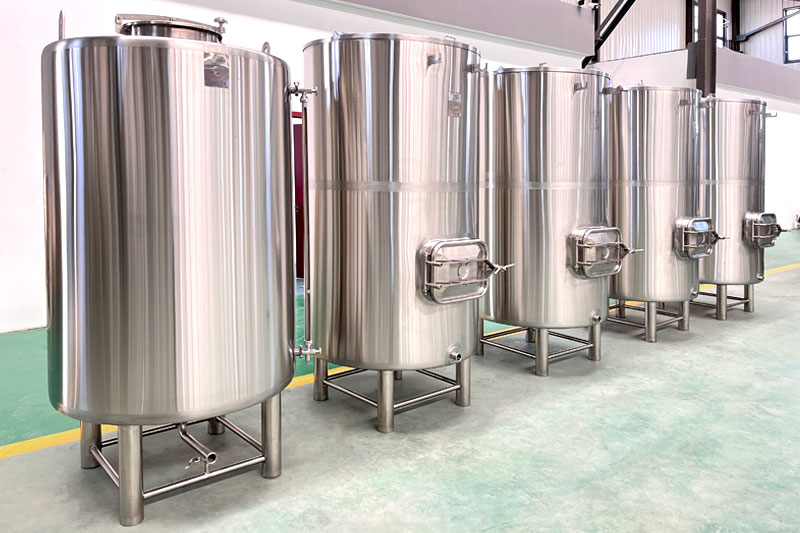
4. Bright Tanks
Bright tanks, also called brite tanks, are used after fermentation. They allow beer clarification, carbonation, and storage before packaging.
Many breweries use bright beer tanks because they provide better control over the final product.
How Do Fermentation Tanks Work During Beer Fermentation?
Fermentation tanks play a critical role in producing consistent beer. They provide a controlled environment where yeast can transform wort into finished beer.
During primary fermentation, yeast converts sugars into alcohol and carbon dioxide. The brewer controls conditions such as:
- Temperature
- Pressure
- Oxygen level
- Fermentation time
Modern beer fermentation tanks are usually conical fermenters. The conical design allows yeast collection at the bottom of the tank, making harvesting and cleaning easier.
A typical fermentation process includes:
- Filling the tank with cooled wort
- Adding yeast
- Controlling fermentation temperatures
- Monitoring pressure
- Removing yeast sediment
- Transferring mature beer
Different beer styles require different fermentation temperatures. For example:
| Beer Style | Typical Fermentation Temperature |
| Lager | Lower temperatures |
| Ale | Warmer temperatures |
| Specialty beer | Customized conditions |
Professional breweries rely on accurate temperature systems because even small changes can influence flavor.
Our customized fermentation vessels use cooling jackets and insulation systems to maintain precise temperature control during fermentation and maturation.
Why Are Stainless Steel Tanks Popular in Modern Breweries?
Stainless steel has become the preferred material for brewery tanks because it combines durability, hygiene, and performance.
Most professional stainless steel brewery tanks are constructed from food-grade stainless steel, especially grades such as 304 and 316.
The advantages include:
Excellent Sanitation
Stainless steel surfaces are smooth and resistant to corrosion. This reduces contamination risks and makes cleaning easier.
Long Service Life
Compared with other materials, stainless steel tanks can operate reliably for many years under demanding brewery conditions.
Temperature Stability
Many stainless steel tanks include cooling jackets that help maintain stable fermentation temperatures.
What Is the Difference Between Fermentation Tanks and Brite Tanks?
Many new brewery investors confuse fermentation tanks and brite tanks because both are used after wort production. However, they serve completely different purposes in the brewing operation.
Fermentation tanks are designed for the biological fermentation process. They provide an environment where yeast converts sugar into alcohol and carbon dioxide. During this stage, the beer develops its primary flavors and alcohol characteristics.
After fermentation is complete, breweries often transfer beer into brite tanks for clarification, carbonation, and final preparation before packaging.
The main differences are shown below:
| Feature | Fermentation Tanks | Brite Tanks |
| Main Purpose | Beer fermentation | Beer conditioning and storage |
| Yeast Activity | Active yeast conversion | Minimal yeast activity |
| Main Process | Primary fermentation | Secondary fermentation and carbonation |
| Pressure Control | Moderate pressure | Higher pressure capability |
| Final Use | Produces young beer | Produces bright beer |
In professional breweries, using both fermentation tanks and bright tanks improves consistency. It allows brewers to separate fermentation and storage tasks, creating better control over the final product.
For example, a craft brewery producing multiple beer styles can use several fermenters for different recipes while keeping bright tanks available for packaging schedules.
How Do Brewery Tanks Support Different Stages of the Brewing Process?
The complete brewing process requires several vessels working together. Each tank supports a specific stage, allowing breweries to produce stable and high-quality beer.
A modern beer brewing system usually includes:
Mash tanks
Lauter tanks
Kettles
Whirlpool tanks
Fermentation tanks
Bright tanks
Storage tanks
These brewing vessels create a continuous production workflow.
Stage 1: Wort Production
The process begins with malted grains, water, and hops. Brewers create wort through mashing and boiling.
The wort contains sugars that yeast needs during fermentation.
Stage 2: Primary Fermentation
The cooled wort enters fermentation tanks. Yeast begins converting sugar into alcohol and carbon dioxide.
During this period, temperature control becomes extremely important. Different beer styles require different fermentation temperatures.
Stage 3: Maturation and Conditioning
After primary fermentation, beer may move into conditioning tanks or bright tanks.
This stage improves:
Flavor balance
Clarity
Carbonation
Stability
Stage 4: Packaging
Once the beer reaches the desired quality, it moves to filling equipment.
A complete tank system helps breweries maintain consistent production from the first batch to thousands of liters per day.
As an experienced brewing equipment manufacturer, we help customers design tank layouts based on production capacity, building space, and future expansion requirements.
What Types of Stainless Steel Are Used for Beer Tanks?
Choosing the correct stainless steel material is important for brewery equipment performance.
The most common types of stainless steel used in breweries are:
| Stainless Steel Grade | Application | Features |
| 304 Stainless Steel | Most brewery tanks | Good corrosion resistance and durability |
| 316 Stainless Steel | Premium applications | Higher chemical resistance |
| 316L Stainless Steel | High-end beverage production | Excellent sanitation performance |
Most brewery tank systems use 304 stainless steel because it provides excellent value for daily production.
However, some beverage producers choose 316L stainless steel when they need stronger resistance against chemicals or more demanding environments.
The internal surface finish also matters. A smooth polished surface reduces residue buildup and makes cleaning easier.
Professional manufacturers focus on:
- Food-grade materials
- Sanitary welding
- Internal polishing
- Pressure testing
- Quality inspection
These details help breweries produce safe and reliable beverages.
How Do Brewers Choose the Right Brewery Tank Size and Design?
Selecting the correct tank size is one of the most important decisions when building a brewery.
The ideal tank depends on:
- Daily production volume
- Beer styles
- Fermentation time
- Available factory space
- Expansion plans
For example:
| Brewery Type | Typical Equipment Consideration |
| Brewpub | Small fermentation tanks and compact systems |
| Microbrewery | Flexible tanks for multiple recipes |
| Craft brewery | Multiple fermentation vessels |
| Commercial brewery | Large-scale automated systems |
A common mistake is choosing tanks only based on current production. A growing brewery should consider future capacity.
Our customized solutions help customers select the right tank volume and configuration according to their business goals.
A small startup may need a compact beer brewing system, while a large commercial producer may require a complete automated brewing facility.

How Can Customized Brewing Systems Improve Commercial Beer Production?
Every brewery has different goals. A taproom, craft brewery, and industrial producer do not need the same equipment setup.
Customized brewing systems help businesses improve:
- Production efficiency
- Product consistency
- Labor management
- Energy usage
- Quality control
- A complete brewing system may include:
- Customized brewing tanks
- Fermentation vessels
- Temperature control systems
- Cleaning systems
- Automation controls
- Packaging connections
For beverage startups, flexible equipment design helps reduce initial investment risks.
For established breweries, upgraded brewing systems improve capacity and product diversity.
For engineering contractors and project investors, a reliable equipment partner helps reduce installation challenges.
As a professional brewery equipment manufacturing plant, we provide:
- Stainless steel brewing systems
- Fermentation tanks
- Brewhouse systems
- Turnkey brewery solutions
Our engineering team works with customers from planning and design to manufacturing, installation support, and after-sales service.
What Are the Advantages of Using Professional Brewery Tanks?
High-quality tanks directly influence brewery performance.
Professional brewery tanks provide several benefits:
Better Beer Consistency
Stable temperature, pressure, and sanitation conditions help brewers produce the same flavor profile batch after batch.
Improved Production Efficiency
Well-designed tanks reduce manual work and simplify daily brewing operations.
Easier Cleaning
Modern stainless steel tanks support efficient cleaning procedures and reduce contamination risks.
How to Select a Reliable Brewery Tank Manufacturer?
Choosing the right supplier is as important as choosing the right equipment.
A professional manufacturer should provide:
Engineering Experience
The supplier should understand brewing operations, not only manufacture metal tanks.
Custom Design Capability
Every brewery has different requirements. Equipment should match:
Every brewery has different requirements. Equipment should match:
Production capacity
Layout
Process requirements
Quality Materials
Reliable manufacturers use food-grade stainless steel and follow strict production standards.
Complete Support
A good supplier provides:
- Technical consultation
- Equipment customization
- Installation guidance
- Long-term service
When selecting a partner, breweries should evaluate more than price. Equipment quality, engineering support, and long-term reliability directly affect business success.
How Do Modern Brewing Tanks Improve Beer Quality and Production Efficiency?
In today’s competitive brewing industry, equipment quality directly affects product consistency and business growth. A well-designed tank system allows breweries to control every important step, from wort preparation to finished beer storage.Modern brewing tanks are not simply containers. They are engineered production tools that help brewers manage:
Fermentation conditions
- Temperature stability
- Pressure control
- Sanitation
- Production scheduling
For example, a conical fermenter allows yeast collection from the bottom of the tank through a dedicated valve. This makes yeast management easier and improves the efficiency of the brewing operation.
Advanced tanks may include:
- Cooling jackets
- Pressure gauges
- Sampling valves
- CIP spray balls
- Temperature sensors
- Automated control systems
These features help breweries reduce human error and maintain consistent quality.
For commercial breweries producing thousands of liters per batch, reliable tank design becomes even more important. Small differences in temperature, pressure, or cleaning procedures can influence the final product.
A professional tank system supports stable production while allowing breweries to develop various beer styles and expand their product portfolio.
What Role Does Temperature Control Play in Beer Fermentation?
Temperature control is one of the most important factors in successful beer fermentation.
Yeast is a living organism, and different yeast strains perform best within specific fermentation temperatures.
If the temperature is too high:
- Yeast may create unwanted flavors
- Fermentation can become unstable
- Beer quality may decrease
- If the temperature is too low:
- Fermentation may slow down
- Yeast activity may reduce
- Production time may increase
Modern fermentation tanks use cooling jackets and insulation systems to maintain accurate conditions.
A professional fermentation system allows brewers to monitor:
- Fermentation temperatures
- Tank pressure
- Yeast activity
- Fermentation time
This precise control helps produce consistent beer from batch to batch.
For breweries producing premium products, temperature management is not optional. It is a key factor that separates average beer from high-quality beer.
How Do Different Beer Styles Require Different Brewery Tank Solutions?
Different beer styles require different production methods. A flexible tank system allows breweries to create a wider range of products.
For example:
| Beer Style | Tank Requirements |
| Lager | Long fermentation time and accurate cooling |
| IPA | Strong aroma preservation and dry hopping capability |
| Stout | Special recipe control and maturation time |
| Sour Beer | Dedicated fermentation management |
| Craft Specialty Beer | Flexible production systems |
A brewery producing multiple styles may need different fermentation vessels and storage solutions.
For this reason, professional breweries often invest in customized systems rather than standard equipment packages.
A well-planned tank layout helps breweries:
- Increase product variety
- Improve production scheduling
- Reduce cleaning conflicts
- Maximize factory space
As customer demands continue changing, flexible brewing equipment becomes a valuable long-term investment.
What Are the Most Common Problems Caused by Poor Brewery Tank Selection?
Choosing the wrong tank can create many challenges during daily production.
Common problems include:
Insufficient Capacity
A tank that is too small limits production growth and increases labor costs.
Poor Temperature Control
Without proper cooling systems, fermentation quality may become inconsistent.
Difficult Cleaning
Poor tank design can increase cleaning time and contamination risks.
Limited Expansion Ability
A brewery may struggle to add new products or increase output.
Many new breweries focus only on initial equipment cost. However, the lowest purchase price does not always create the best long-term value.
A reliable tank system should consider:
- Current production
- Future expansion
- Maintenance requirements
- Energy efficiency
- Product quality goals
Working with an experienced brewery equipment manufacturer helps avoid these problems before production begins.
Case Study: Customized Stainless Steel Brewery Tanks for Growing Beverage Businesses
A growing craft brewery often faces the challenge of increasing production while maintaining the same beer quality.
For example, a brewery may begin with small brewing equipment but later need:
- Larger fermentation tanks
- Additional bright tanks
- Better temperature control
- Improved production workflow
A customized solution allows the brewery to expand step by step.
The equipment planning process usually includes:
- Understanding production goals
- Reviewing factory space
- Selecting suitable tank volumes
- Designing the brewing layout
- Manufacturing equipment
- Supporting installation and operation
This approach reduces investment risks and creates a smoother production upgrade.
Our team provides customized stainless steel brewing systems for breweries worldwide, helping customers build efficient facilities based on their specific requirements.
Frequently Asked Questions About Brewery Tanks
What tanks are used in beer brewing?
Beer brewing commonly uses mash tanks, kettles, fermentation tanks, bright tanks, conditioning tanks, and storage tanks. Each tank supports a different stage of the brewing process.
Why are stainless steel tanks commonly used in breweries?
Stainless steel tanks are popular because they are durable, corrosion-resistant, easy to clean, and suitable for sanitary beverage production.
What is the difference between fermentation tanks and bright tanks?
Fermentation tanks are used for yeast activity and alcohol production, while bright tanks are used for clarification, carbonation, and final beer storage before packaging.
How long does beer stay in fermentation tanks?
The fermentation time depends on the beer style, yeast strain, and recipe. Some beers require several days, while others need several weeks for proper fermentation and maturation.
What size brewery tank do I need for commercial beer production?
The correct tank size depends on production volume, brewing frequency, available space, and future expansion plans. A professional supplier can design a system based on your business goals.
Can brewery tanks be customized?
Yes. Professional manufacturers can customize tank capacity, shape, connections, automation systems, cooling systems, and layout according to customer requirements.