
Nancy Shang | Founder & CEO, MICET | Published September 11, 2026
Canning line cost is driven by five separable components — washing, filling, drying, coding, and labeling — each priced by its own throughput and automation level, not by one blended per-line figure. This breaks down what moves the number in each stage.
Component specifications and pricing structures change as manufacturers update equipment lines, so treat the cost drivers below as the framework and request current figures directly for your specific configuration.
Why a Single Price Range Doesn’t Work Here
Most canning line pricing content gives a wide range — tens of thousands to several hundred thousand dollars — without explaining what pushes a quote toward either end. That range isn’t wrong, it’s just not useful for budgeting, because a canning line isn’t one machine. It’s five machines with independent specs, and a buyer optimizing for throughput on one stage while leaving another at a lower capacity ends up with a line where four machines wait on the fifth.
The breakdown below uses the actual component specifications behind a fully automatic can filling line, so the cost drivers map to numbers you can check against a quote line by line.
Canning Line Component Specifications and Cost Drivers
| Component | Key Specification | What Drives Cost Up | What Drives Cost Down |
| Can Filling & Capping Machine | 12 filling nozzles, 1 capping head, 1,000–1,200 cans/hour, isobaric filling, filling temp ≤4°C, ±5mm filling accuracy, 2.5kW motor, 415V | More nozzles for higher throughput; tighter fill accuracy tolerance | Fewer nozzles; standard (non-isobaric) filling method |
| Drying Machine | 100 cans/minute, 6kW power, 3-phase 415V/50Hz, 4.0kW air pump, 530m³/h max flow rate | Higher airflow capacity to match faster filling lines | Lower throughput matched to a smaller filling stage |
| Laser Coding Machine | Prints date, time, batch no., category, serial no.; rated to ≤90% working humidity | Additional print fields, faster line-speed compatibility | Basic date/batch coding only |
| Labeling Machine | 80–200 cans/minute, diameter range 15–100mm, height range 20–150mm, label length 23–200mm, ±1mm accuracy on comparable filling lines, 600W power | Higher labeling speed to avoid becoming the line’s bottleneck | Slower labeling matched to lower-volume production |
| Can Washing Machine | Pre-fill sanitation stage | Integration with automated line timing | Manual or semi-manual washing step |
Every component’s throughput above needs to be checked against the others — a 1,000–1,200 cans/hour filler paired with a labeling machine running at only 80 cans/minute (4,800/hour capacity) has headroom, but the same filler paired with a slower-rated labeler on a different configuration can bottleneck the whole line.
What Actually Moves the Total Cost
- Nozzle count on the filling machine. A 12-nozzle configuration supporting 1,000–1,200 cans/hour costs more than a lower-nozzle-count unit, but the throughput gain compounds across every downstream stage — a slower filler means every other machine in the line runs under capacity.
- Isobaric versus standard filling method. Isobaric filling — pressurizing the can before filling to reduce oxygen pickup — is a specific process choice, not just a speed setting, and it’s a factor separate from nozzle count.
- Automation level across the line, not just the filler. A fully automated line integrating washing, filling, drying, coding, and labeling into one continuous process costs more than a line where some stages require manual can transfer between machines.
- Can format range. Equipment rated for a wider range of can diameters and heights (15–100mm diameter, 20–150mm height on the labeling stage, for example) costs more than a line built for a single fixed can size.
- Line speed matching across all five components. A line where every component is rated close to the same throughput ceiling avoids paying for excess capacity on any single stage while still avoiding a bottleneck.
- Power and utility requirements. Motor power (2.5kW on the filler, 6kW on the dryer, 4.0kW on the air pump) and voltage compatibility (415V, 3-phase) affect site electrical infrastructure costs that sit outside the equipment quote itself.
MICET Fully Automatic Can Filling Line Specifications
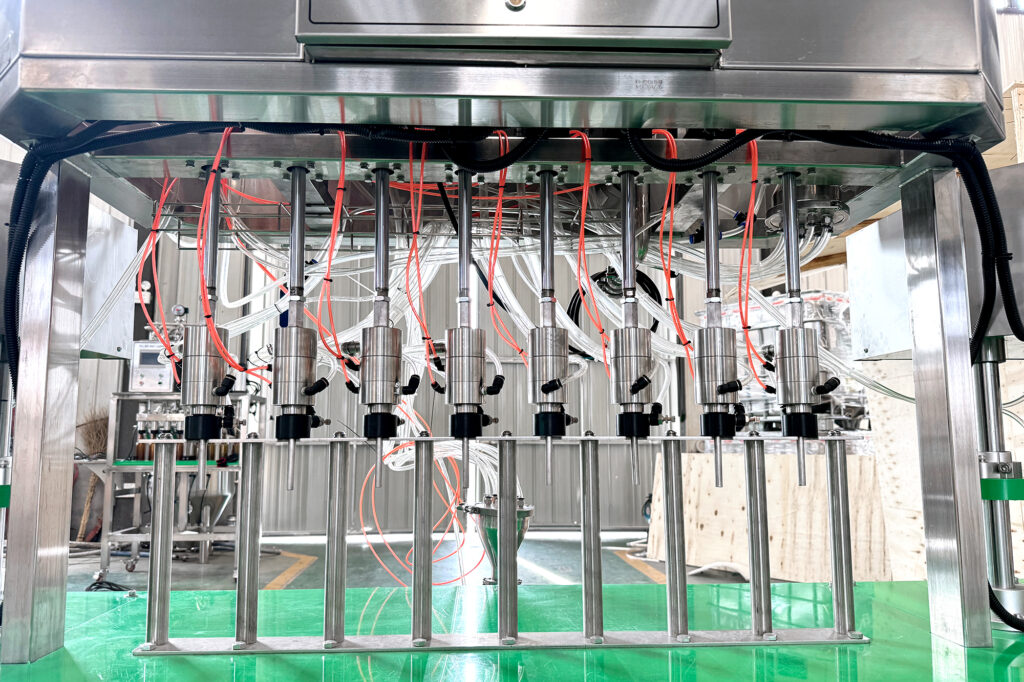
Our fully automatic can filling line integrates five components as a single system: a can washing machine, a can filling and capping machine, a drying machine, a laser coding machine, and a labeling machine.
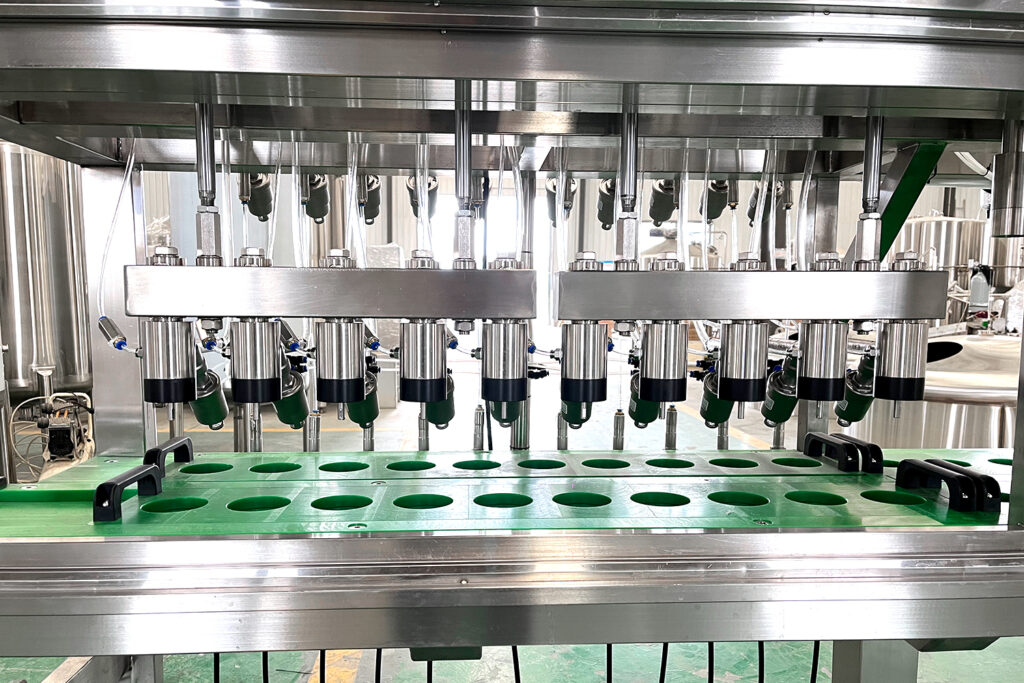
The filling and capping stage runs 12 filling nozzles and 1 capping head at 1,000–1,200 cans per hour, using isobaric filling to reduce oxygen pickup during the fill. Filling temperature holds at 4°C or below, filling accuracy is rated at ±5mm, can height compatibility runs 70–175mm, and the stage draws 2.5kW at 415V.
The drying machine processes 100 cans per minute on 6kW of power (3-phase, 415V, 50Hz), with a 4.0kW air pump rated to a maximum flow of 530m³/h. The laser coding machine prints date, time, batch number, category, and serial number, rated for working environments up to 90% humidity. The labeling machine runs 80–200 cans per minute across a 15–100mm diameter range and 20–150mm height range, with label sizing from 23–200mm long and 15–120mm high, at ±1mm accuracy and 600W power draw.
This full line doesn’t carry a published price band in our resource library — unlike our microbrewery and 10bbl commercial brewhouse systems, which do have disclosed ranges. A canning line quote depends on which of these five stages you’re integrating, throughput targets, and site electrical setup, so this is one where a direct quote against your specific configuration is the accurate next step rather than an estimate.
Where Buyers Misjudge Canning Line Cost
The most common mistake is budgeting for the filling machine and treating the other four components as minor add-ons. In practice, the drying, coding, and labeling stages each carry their own power requirements, throughput ratings, and integration costs — a labeling machine rated at 80 cans per minute bolted onto a filler running 1,000+ cans per hour creates a bottleneck that a buyer who only priced the filler didn’t account for.
A second misjudgment: assuming isobaric filling is a premium feature rather than a functional requirement for shelf-stable canned beer. Isobaric filling reduces oxygen pickup during the can-filling process, which affects finished beer’s shelf stability — it’s not an optional upgrade in the same category as, say, a faster labeling speed.
Compared to the generic cost-factor articles and used-equipment listings currently ranking for this topic, most give a price range without breaking it into the component specifications that actually explain why two canning lines quoted at different prices aren’t directly comparable. A range alone doesn’t tell a buyer whether the difference is nozzle count, automation, or can format flexibility.
FAQ
Q: Why doesn’t MICET publish a fixed price for the canning line?
A: The line integrates five separately specified components — washing, filling, drying, coding, and labeling — and configuration (nozzle count, throughput targets, can format range) changes cost enough that a single published figure would be inaccurate for most buyers’ actual setup.
Q: What’s the difference between isobaric and standard can filling?
A: Isobaric filling pressurizes the can before the fill to reduce oxygen pickup, which affects shelf stability of the finished product. Standard filling doesn’t include this pressurization step.
Q: How many cans per hour does a standard filling and capping stage run?
A: The specification for a 12-nozzle, single-capping-head configuration is 1,000–1,200 cans per hour, though this varies with nozzle count and configuration.
Q: Can the labeling machine handle different can sizes without retooling?
A: The labeling machine spec covers a 15–100mm diameter range and 20–150mm height range, which covers most standard can formats, but confirm compatibility with your specific can dimensions before ordering.
Q: What electrical infrastructure does a full canning line require?
A: The filling stage runs on 2.5kW at 415V, and the drying machine draws 6kW on 3-phase 415V/50Hz power with a separate 4.0kW air pump. Site electrical capacity should be confirmed against these figures before installation.
Q: Is a slower, less automated canning line ever the right choice for a smaller brewery?
A: Yes, particularly for lower-volume operations where the throughput of a fully automated 1,000+ cans/hour line exceeds actual production needs — matching line speed to realistic output avoids paying for capacity that sits idle.