
A Bright Tank vs Fermentation Tank comparison is a comparison between two different stages of brewery production. Both are usually sanitary stainless steel vessels and may use glycol cooling or pressure control, but their jobs are different: the fermentation tank turns wort into beer, while the Bright Tank prepares finished beer for carbonation and packaging.
A small brewery may use pressure-rated unitanks for both stages. A growing brewery may need dedicated Bright Tanks because keeping finished beer in fermentation tanks prevents new batches from entering production. The decision depends on the fermentation cycle, packaging schedule, product mix, and working volume.
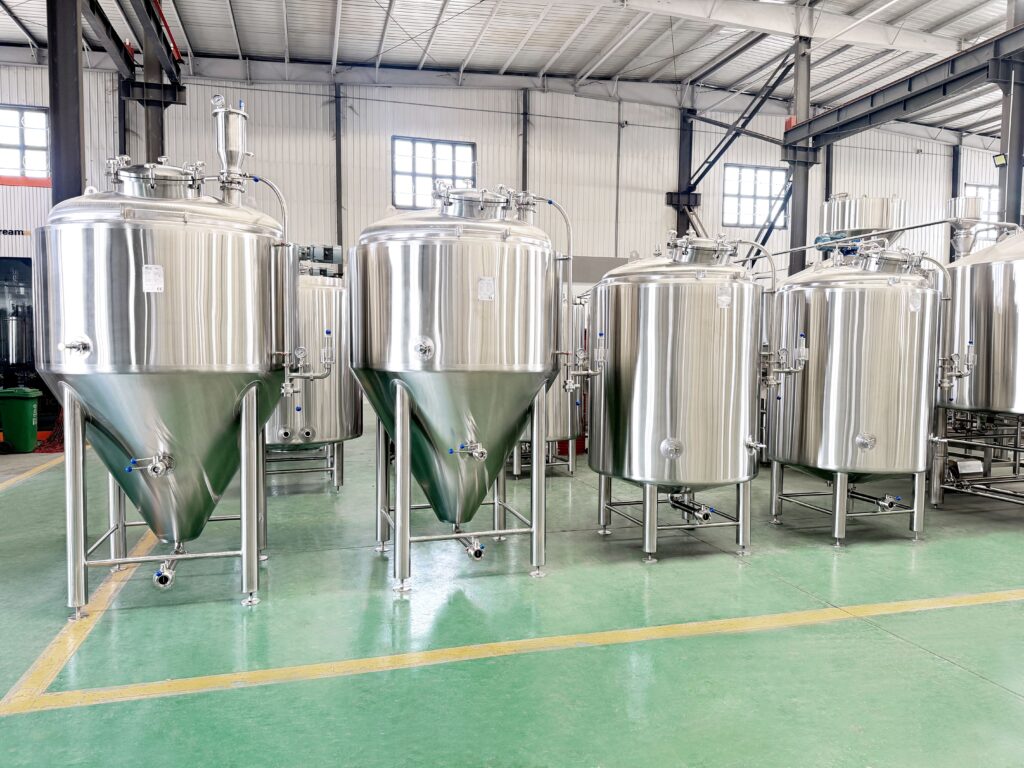
What “Bright Tank” and “Fermentation Tank” Actually Mean
A fermentation tank supports the biological part of the beer fermentation process. Cold wort enters the vessel, yeast is pitched, and temperature is controlled as the yeast produces alcohol, carbon dioxide, and flavor compounds. A cylindroconical design also helps collect yeast and sediment through the cone.
The tank remains occupied beyond active fermentation. Cooling, maturation, yeast removal, transfer, cleaning, and inspection all take time. If a batch needs 14 days before transfer, the tank should be planned as a 14-day production asset.
A Bright Tank, also called a beer conditioning tank, is used after fermentation for conditioning, clarification, carbonation, quality holding, and transfer to kegs, bottles, or cans. “Bright” describes the intended condition of the beer; the tank itself does not automatically filter it.
In simple terms, the fermentation tank follows the yeast schedule, while the Bright Tank follows the beer packaging schedule.
Fermentation Tank: The Vessel That Controls the Production Cycle
A commercial fermentation tank needs a cooling jacket, temperature control, pressure management, sanitary sampling, yeast removal, cleaning coverage, and a suitable bottom outlet. The conical bottom concentrates yeast and sediment, making removal and tank turnover easier.
Tank occupancy depends on the product. An ale may release its tank sooner than a lager that needs longer cold conditioning. High-gravity beer, heavy dry hopping, and quality holds can also extend the cycle. Therefore, “14 days of fermentation” should not be treated as “14 days of tank occupancy” unless transfer, cleaning, and release are included.

Bright Tank: The Vessel That Separates Finished Beer from Packaging
A Bright Tank is a pressure-rated vessel with cooling, carbonation, sampling, cleaning, and sanitary transfer connections. After fermentation, beer can be cooled, carbonated, quality-checked, and transferred to the packaging line at controlled pressure.
Its main advantage is scheduling. Once beer moves into this vessel, the fermenter can be cleaned and refilled while the finished beer waits for packaging. If beer is ready on Wednesday but packaging is not available until Friday, this separation prevents a two-day delay from blocking production.
A Bright Tank does not make a slow filling line faster or replace an undersized glycol system. It is valuable when fermentation and packaging no longer operate on the same timetable.
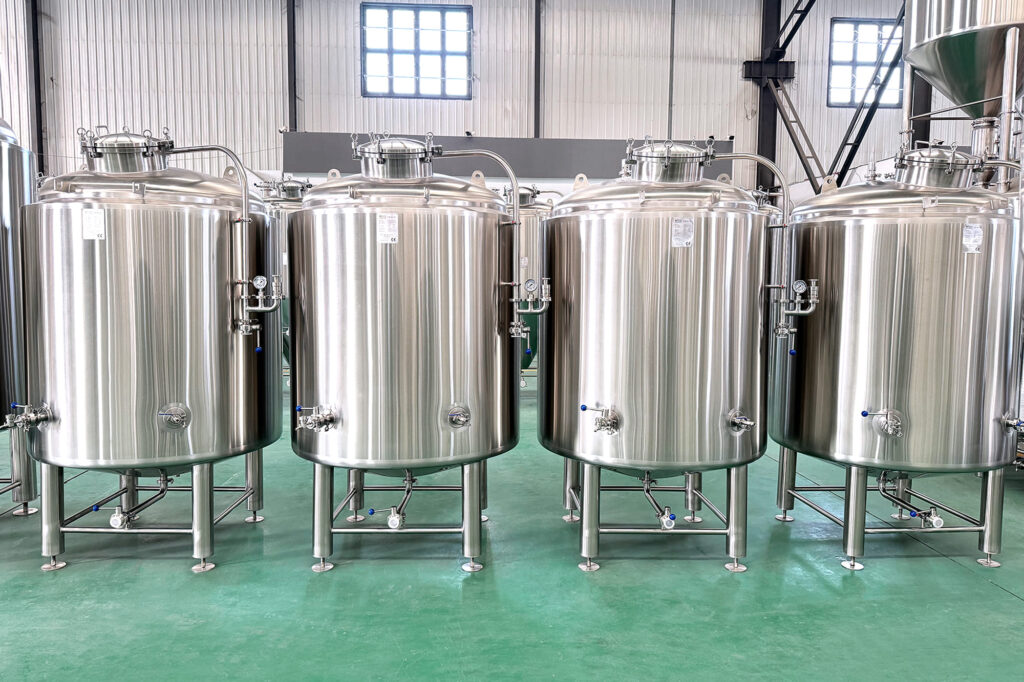
Bright Tank vs Fermentation Tank: The Difference in One View
| Feature | Fermentation Tank | Bright Tank |
|---|---|---|
| Primary purpose | Yeast-driven fermentation and related conditioning | Clarification, carbonation, holding, and packaging preparation |
| Typical contents | Cold wort and actively fermenting or conditioning beer | Finished or nearly finished beer |
| Main schedule | Fermentation and maturation cycle | Packaging and dispatch cycle |
| Yeast management | Cone and outlet commonly support yeast removal | Usually not intended for primary yeast collection |
| Cooling duty | Removes fermentation heat and controls temperature | Maintains cold beer for conditioning and carbonation |
| Pressure use | May support controlled fermentation when designed for it | Supports carbonation and pressure transfer when specified |
| Main capacity risk | Tank remains occupied during a long fermentation cycle | Tank may become a packaging buffer or waiting point |
The two tanks may share some features, but they should not be specified as interchangeable without checking working pressure, cooling duty, internal fittings, cleaning coverage, and the intended process sequence.
Can a Fermentation Tank Replace a Bright Tank?
A pressure-rated fermentation tank can operate as a unitank for fermentation, conditioning, carbonation, and direct packaging. This reduces transfers and equipment count, so it can suit a small brewery with a limited product range and one or two packaging days per week.
The trade-off is tank availability. If a brewery keeps each batch in the fermentation tank until packaging, the tank cannot accept a new batch until transfer, cleaning, and preparation are complete. The brewery may have enough brewhouse capacity but still miss its schedule because fermentation tanks are occupied.
A separate conditioning vessel changes the sequence: finished beer moves out of the fermentation tank, the fermentation vessel is cleaned and refilled, and the beer waits for carbonation or packaging. This adds a transfer and another vessel to clean, but improves tank turnover. A unitank therefore saves equipment while a separate system provides more scheduling flexibility.
A real MICET project example
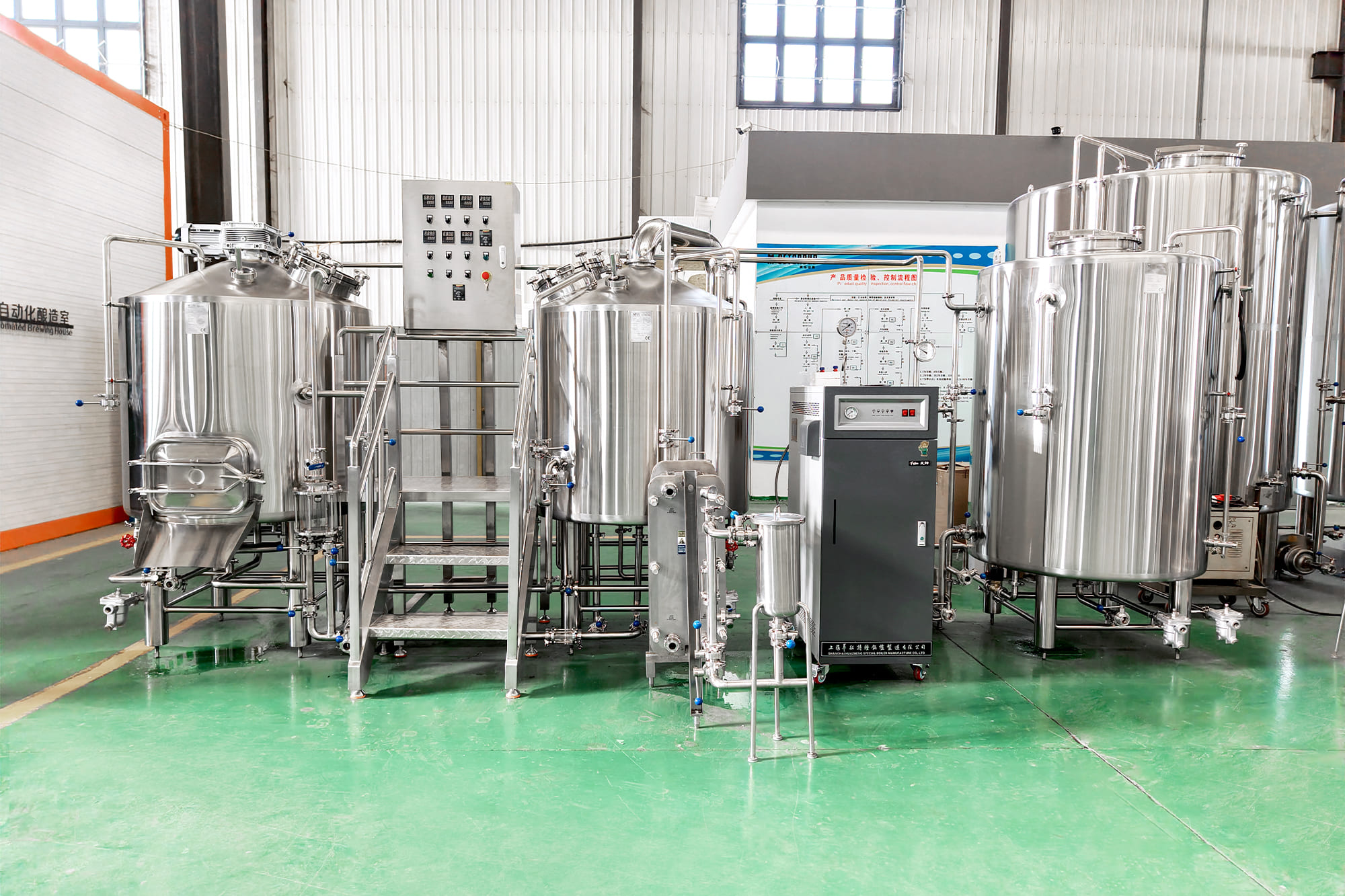
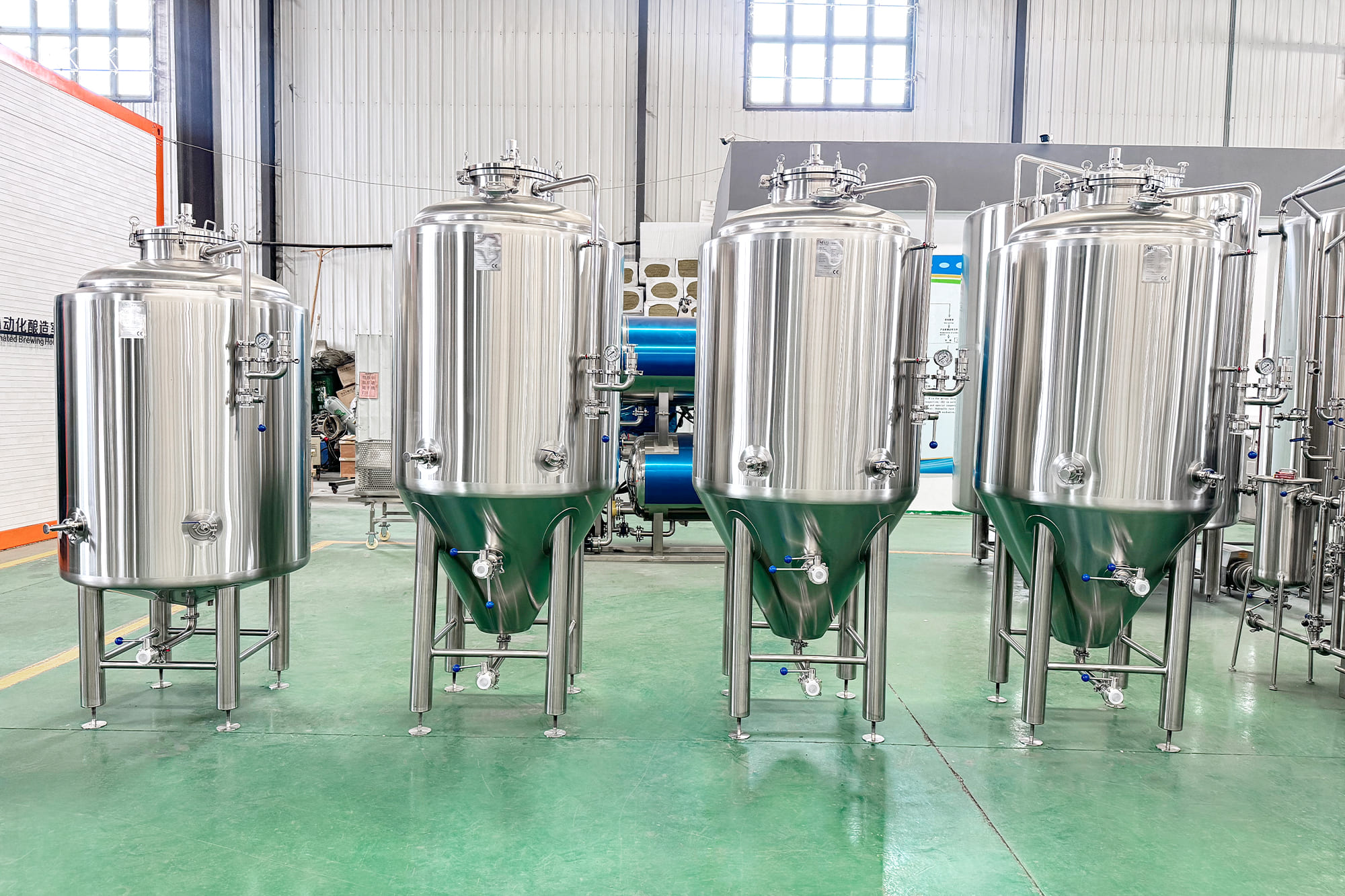
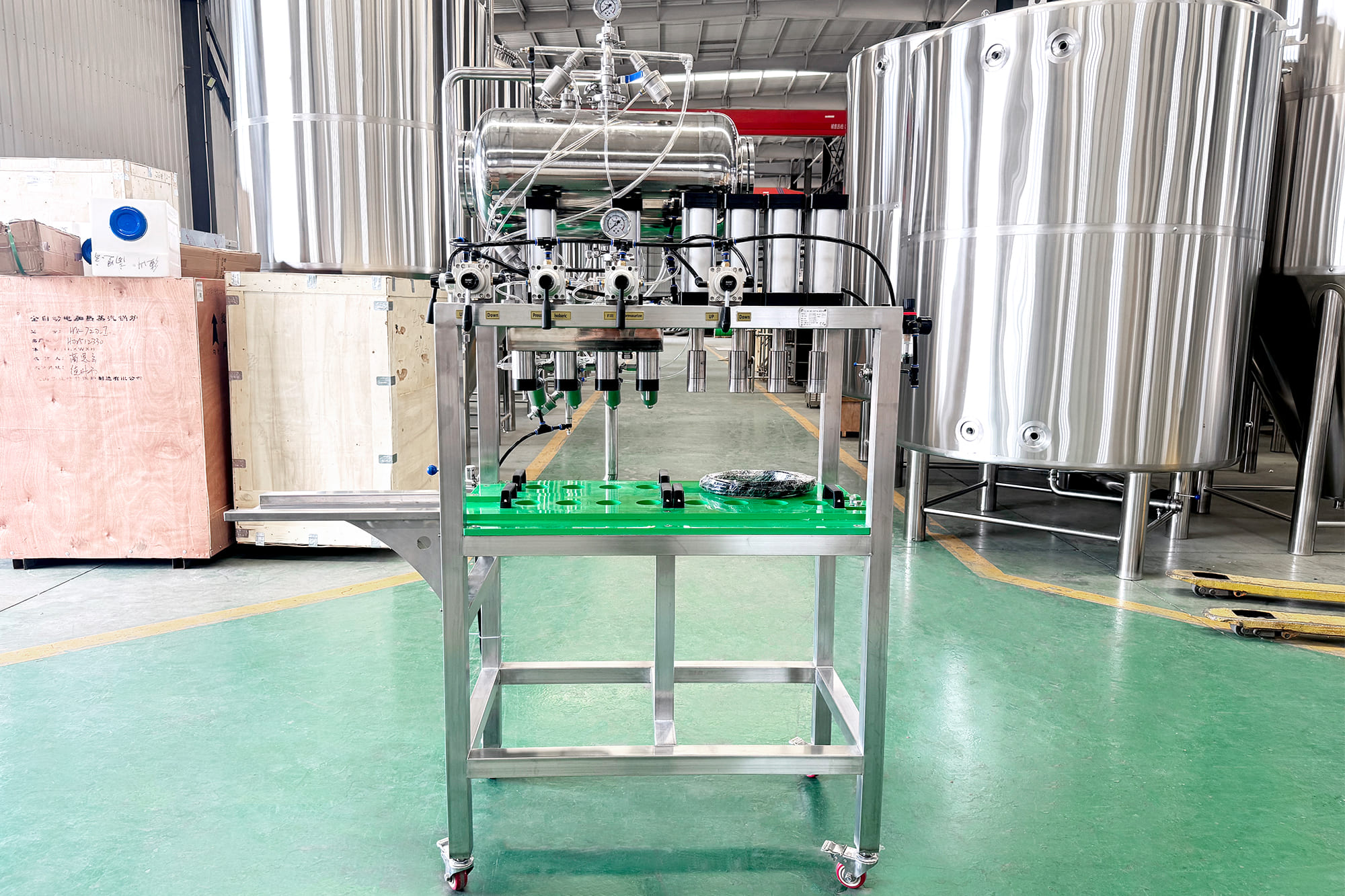
MICET’s 500L brewery equipment project for a customer in Taiwan, China used a 500L 2-vessel brewhouse, three 500L fermentation tanks, and one 500L Bright Tank. The three fermenters supported separate batches, while the dedicated conditioning vessel handled carbonation before bottle filling. The system also included a 1,200L ice water tank, a 5HP chiller, a 50L CIP system, and a 4-head bottle filling and capping machine.
This project shows how a small commercial brewery can separate fermentation capacity from packaging preparation. The right tank balance still depends on fermentation time, packaging frequency, and product mix.
When Does a Brewery Need Both Tanks?
The strongest reason to use both is a mismatch between fermentation and packaging time. A separate conditioning vessel is most useful when:
- fermentation tanks must be released before the next packaging date;
- different beer styles have different fermentation or carbonation schedules;
- packaging takes place on fixed days or is slower than brewing;
- finished beer needs a separate carbonation, clarification, or quality-hold stage.
This is common in breweries producing lagers, seasonal beers, or several packaging formats. Separating finished beer from the biological process prevents packaging delays from stopping fermentation and brewing. The decision should be based on packaging hours, changeover time, cleaning time, and the number of batches waiting to be packaged.
When May Fermentation Tanks Alone Be Enough?
Dedicated Bright Tanks are not necessary for every brewery. A small operation may package directly from pressure-rated unitanks when it has a limited product range, predictable packaging days, and enough fermentation capacity.
Fermentation tanks alone may be sufficient when:
- packaging takes place once or twice per week;
- tanks can remain occupied until carbonation and packaging are complete;
- the operation is primarily a taproom or brewpub with modest production volume.
The limitation is that an atmospheric fermentation tank is not automatically suitable for carbonation or pressurized beer storage. Unitank use requires the correct pressure rating, safety devices, fittings, cooling system, carbonation arrangement, and cleaning design.
How Many Fermentation Tanks Do You Need?
The practical way to calculate fermentation tank capacity is to combine the number of batches produced each week with the time each batch occupies a tank. A basic planning formula is:
Required fermentation tank positions = Batches per week × Tank occupancy in weeks
Consider a brewery with a 1,000 L working batch size and a schedule of four batches per week. If each batch occupies a fermentation tank for 14 days, the minimum mathematical requirement is:
4 batches per week × 2 weeks = 8 occupied fermentation tank positions
Eight is the calculated minimum under those assumptions. It does not automatically mean that eight tanks are a practical final configuration. A delayed fermentation, a tank under maintenance, a slow-maturing beer, or a cleaning problem can remove one tank from the schedule. A brewery may therefore choose nine or ten tanks to provide operating flexibility, but the required reserve depends on the business’s tolerance for delays and its product mix.
If tank occupancy rises from 14 days to 21 days, the same four-batch schedule requires:
4 batches per week × 3 weeks = 12 occupied fermentation tank positions
The brewhouse has not changed, yet the required fermentation capacity has increased by 50%. That is why a brewery should calculate occupancy from the complete process rather than use the brewhouse size as a shortcut for total brewery capacity.
How Many Bright Tanks Do You Need?
The number of conditioning vessels is linked to the volume reaching packaging, the time beer remains there, and the number of packaging sessions available each week. A simple planning formula is:
Required conditioning-vessel positions = Packaging batches per week × Occupancy in weeks
If four 1,000 L batches reach packaging every week and each batch occupies a conditioning vessel for seven days, the mathematical minimum is:
4 batches per week × 1 week = 4 vessel positions
A fifth vessel may be useful for maintenance, laboratory release, or product separation. A brewery that packages only twice per week may instead transfer two compatible batches into one larger vessel, provided the beer styles, carbonation targets, working volume, pressure requirements, and packaging sequence allow it.
The calculation should use working volume, not only the nameplate figure. A tank sold as 1,000 L nominal volume may have a lower recommended working volume because of headspace, foam, sediment, carbonation space, and safe operating limits.
Cooling, Pressure, and CIP Requirements
Both vessels may use a brewery’s glycol cooling system, but their cooling duties differ. A fermentation tank must remove heat from yeast activity, while a Bright Tank usually maintains cold beer for clarification and carbonation. The chiller and glycol pump should be sized for simultaneous demand; adding tanks without checking cooling capacity can lengthen the production cycle.
Pressure requirements also differ. A unitank must support fermentation and carbonation pressure, while a Bright Tank must support carbonation and safe transfer to packaging. Pressure relief devices, gauges, valves, and fittings should be specified for the intended process. An atmospheric fermentation tank should not be used for pressurized beer storage.
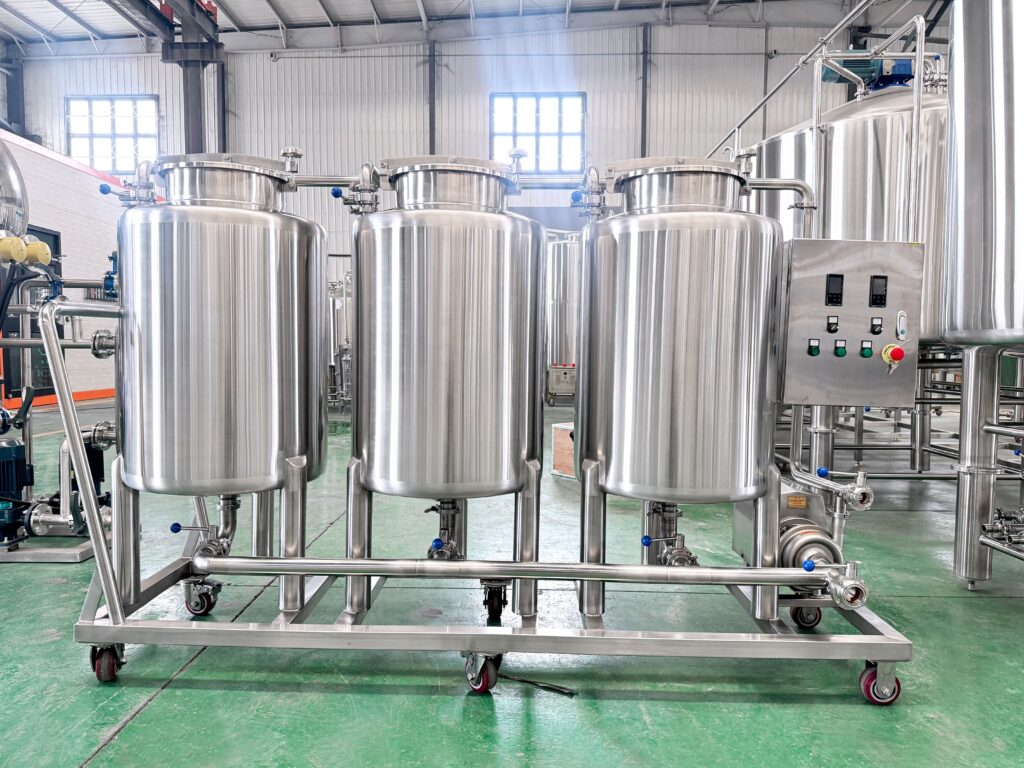
Cleaning follows the same principle. A CIP system must reach the tank interior, valves, transfer lines, sample connections, and low points. Effective cleaning depends on the complete product and cleaning path, not only on the stainless steel shell.
What Should Be Confirmed in a Tank Quotation?
Before comparing prices, ask the supplier to define the nominal volume and recommended working volume for both the fermentation tank and the Bright Tank. The quotation should clearly state:
- headspace allowance and working volume;
- design and working pressure;
- cooling-jacket conditions and glycol requirements;
- carbonation and pressure-transfer provisions;
- yeast collection and CIP connection layout;
- spray coverage, drainability, footprint, and maintenance clearance.
It is equally important to confirm where the supplier’s output figure is measured. Is it the volume entering the fermentation tank, the volume transferred to the Bright Tank, or the volume packaged into kegs, bottles, or cans? These figures can differ because of yeast sediment, transfer losses, quality holds, and packaging losses. A clear quotation connects tank capacity to the brewery’s production schedule instead of presenting vessel volume as finished-beer output.
A Practical Decision Guide
The choice can be summarized as follows:
- Use pressure-rated unitanks when production is modest, packaging is predictable, and tanks can remain occupied until the beer is ready.
- Add dedicated Bright Tanks when the brewery makes several styles, packages on fixed days, or needs to release fermentation tanks for new batches.
- Use a mixed configuration when core beers follow a regular packaging schedule but limited-release or long-maturing beers need to remain in unitanks.
The final decision should be based on tank occupancy and the complete production schedule, not on a universal tank ratio.
FAQ
Is a Bright Tank the same as a beer conditioning tank?
In most brewery contexts, these terms describe the same type of pressure-rated vessel used for beer conditioning, carbonation, holding, and packaging preparation. The exact fittings and working pressure still need to be confirmed in the equipment specification.
Can all fermentation tanks be used as unitanks?
No. A fermentation tank must be designed and rated for the pressure, carbonation, transfer, safety, and cleaning requirements of unitank operation. A vessel intended only for atmospheric fermentation should not be used for pressurized beer storage.
Does a Bright Tank make beer clear automatically?
No. A Bright Tank provides controlled temperature, pressure, settling, and transfer conditions, but clarification depends on the complete process. Cold conditioning, settling, fining, filtration, centrifugation, or other methods may be involved.
Is a Bright Tank necessary for a 1,000 L brewery?
The answer depends on the schedule rather than the number alone. A 1,000 L brewery that packages infrequently may work with pressure-rated unitanks. If it brews four batches per week, has a 14-day fermentation cycle, and packages on fixed days, dedicated Bright Tanks may release fermentation capacity and prevent packaging delays.
Which tank should be purchased first?
For most new breweries, fermentation capacity should be established first because every batch needs a suitable vessel for the biological process. Bright tanks become a priority when packaging, carbonation, or tank turnover limits the brewery’s ability to produce and package the required volume. The final decision should follow a complete schedule that includes working volume, occupancy time, cleaning, cooling, and packaging.