
Struggling with inconsistent batches and unpredictable fermentation outcomes in your winery? The challenge of maintaining purity and control can compromise the quality of your final product. The solution lies in selecting the right vessel, one that offers precision, durability, and cleanliness for every vintage.
A stainless steel wine tank is the industry standard for modern winemaking, offering unparalleled control over temperature, hygiene, and oxygen exposure. These inert vessels ensure that the true character of the grape is preserved without adding external flavors, unlike oak or concrete. For winemakers seeking consistency, scalability, and pristine fruit expression, stainless steel fermentation tanks provide the optimal environment for producing high-quality wine, from primary fermentation to final storage and bottling.
Executive Summary
For B2B decision-makers and discerning brewmasters, here are the key takeaways from this guide:
- Material Superiority: Stainless steel (typically 304 or 316 grade) is the preferred material for wine tanks due to its inert nature, durability, and ease of sanitation, preventing contamination and preserving the wine’s true flavor profile.
- Critical Feature – Temperature Control: Glycol jackets are non-negotiable for producing high-quality wine. They provide precise temperature control during fermentation, which is crucial for managing yeast activity and developing desired aromas and flavors.
- Types and Customization: Wine tanks come in various forms, including closed-top, variable capacity (floating lid), and stackable designs. As manufacturers, we specialize in customizing tanks to fit your specific production needs, space constraints, and winemaking style.
- Long-Term ROI: While the initial investment can be significant, the longevity, low maintenance, and production consistency of stainless steel tanks offer a superior return on investment compared to barrels or concrete tanks.
- Supplier Partnership is Key: Choosing a supplier is about more than the tank itself. It’s about securing a partner who provides engineering expertise, robust after-sales support, and a deep understanding of the winemaking process.
- Beyond Wine: The principles of stainless steel fermentation apply to other craft beverages. Our expertise extends to crafting high-quality cider making equipment and distillery systems.
Why Use Stainless Steel Tanks for Winemaking Over Oak Barrels or Concrete?
Choosing the right fermentation vessel is one of the most critical decisions a winemaker can make. For centuries, oak barrels and, more recently, concrete tanks have been staples in the cellar. However, the rise of stainless steel transformed the wine industry for several compelling reasons. The primary advantage is control. Stainless steel is an inert material; it imparts no flavor or tannins to the wine. This allows the winemaker to preserve the pure expression of the grape varietal, a crucial factor for many white wines and modern-style red wines.

Unlike porous materials like wood or concrete, stainless steel is non-porous and incredibly easy to clean and sanitize. This drastically reduces the risk of spoilage from bacteria like Brettanomyces or unwanted yeast strains, ensuring batch-to-batch consistency. Furthermore, the durability and longevity of a stainless steel tank are unmatched. A well-maintained tank will last for decades without degrading, making it a sound long-term investment for any winery. While traditional vessels like French oak barrels have their place for aging and imparting specific complexities, for the crucial stage of fermentation, the control and cleanliness of a stainless steel fermentation tank are unparalleled.
Comparison of Fermentation Vessels
| Feature | Stainless Steel Tank | Oak Barrel | Concrete Tank |
| Flavor Influence | Neutral / None | Adds oak, vanilla, spice, tannin | Subtle minerality, softens tannins |
| Temperature Control | Excellent (with glycol jackets) | Poor; ambient dependent | Good; natural insulation |
| Oxygen Exposure | Controlled; can be zero | Gradual micro-oxidation | Minor micro-oxidation |
| Cleaning & Sanitation | Very Easy | Difficult; harbors microbes | Moderately Difficult |
| Cost (Initial) | Moderate to High | High (per liter) | High |
| Lifespan | 30+ years | 5-10 years (for flavor) | 30+ years |
| Best For | Clean, fruit-forward wines; primary fermentation | Aging, adding complexity & tannin structure | Fermentation & aging; adds texture |
What Are the Different Types of Wine Fermentation Tanks Available?
As manufacturers with deep experience in beverage production equipment, we design and build a variety of tanks to suit different needs. Not all stainless steel wine tanks are created equal; the design of a tank is tailored to its specific function within the winemaking process. Understanding these differences is key to equipping your cellar for success.
The two most common categories are closed-top tanks and variable capacity tanks.
- Closed-Top Tanks: These are sealed vessels used for storage, aging, and fermentation where the volume is fixed. They are ideal for protecting the wine from oxidation once it has been racked and stabilized.
- Variable Capacity Tanks: Also known as floating-lid tanks, these are perhaps the most versatile tanks in a winery. They feature a floating lid that can be lowered onto the surface of the wine, with an inflatable gasket creating an airtight seal. This design is invaluable as it allows you to store variable volumes of liquid without the risk of oxidation from the empty headspace in the tank. This flexibility is perfect for smaller wineries or for handling varying yields from year to year. The ability to adjust the space in the tank makes the variable capacity tank a workhorse in any modern cellar.
Beyond these basic types, specialized tanks exist for specific purposes. For example, tanks designed for red wine fermentation often have wider manways and sloped bottoms to facilitate the removal of grape skins and seeds (pomace) after fermentation. For sparkling wine production, tanks must be built to withstand a large amount of pressure during the secondary biological fermentation.
How Does a Stainless Steel Tank Influence the Taste of My Wine?
The most significant influence a stainless steel tank has on your wine’s taste is by not influencing it. Its beauty lies in its neutrality. When you ferment or store wine in a stainless steel vessel, you are tasting the grape, the terroir, and the decisions you made as a winemaker—not the vessel itself. This is a stark contrast to an oak barrel, which actively contributes flavors of vanilla, spice, and toast, along with tannins that alter the wine’s structure.
This neutrality is a powerful tool. It allows for the production of crisp, clean, and fruit-forward wines like Sauvignon Blanc or unoaked Chardonnay, where the vibrant aromatics are the star. For red wine, starting with a primary fermentation in a stainless tank gives you a “clean slate.” You can capture the pure fruit character of the grape before deciding on a secondary aging program, perhaps in barrels. This control allows you to precisely dial in the desired level of oak influence rather than having it dictated by your primary fermentation vessel.
Essentially, using a stainless steel tank is a commitment to purity. It ensures that the flavors developed come from the yeast, the grape chemistry, and your temperature control strategy—not from the container. It’s about letting the wine speak for itself.
What Key Factors Should I Consider When Buying a Wine Tank?
Buying a wine tank is a significant capital investment, and several factors must be weighed to ensure you get a vessel that serves your winery for years to come. The first consideration is the material itself. Look for high-quality, food-grade stainless steel, typically AISI 304, or for wines with higher acidity or salinity, AISI 316 is a superior choice for its increased corrosion resistance. The quality of the welds is also paramount; they should be smooth, polished, and fully penetrated to prevent microbial growth and make the tank easy to clean.
Next, consider the design and features of the tank. Think about your workflow. Do you need a tank with a sloped or conical bottom for easy draining and removal of solids? What size and type of manway (the access port) do you need? A larger manway on the top of the tank or side of the tank wall makes it easier to access for cleaning or punch-downs during red wine fermentation.
Finally, evaluate the fittings and attachments. This includes the quality of the valves, the inclusion of a sampling port, a thermowell for temperature monitoring, and a racking arm. A racking arm is a crucial component that allows you to draw off clear liquid from the bottom of the tank above the sediment layer (lees). Each of these components plays a vital role in the day-to-day use of the tank and directly impacts your efficiency and the quality of your wine.
How Do I Determine the Right Size and Capacity for My Winery’s Tanks?
Sizing your tanks correctly is a balancing act between your expected grape tonnage, your fermentation strategy, and your available space. A common mistake we see is purchasing tanks that are too large or too small for the intended batch sizes, which can lead to inefficiencies and potential quality issues like oxidation if tanks are left partially full.
Start by calculating your expected yield. As a general rule, one ton of grapes will produce between 150 and 180 gallons (about 570-680 liters) of wine. When sizing a fermentation tank, you need to account for headspace. During an active fermentation, especially a red wine fermentation, the “cap” of grape skins and solids will rise, and foam will be produced. You should size your fermentation tank to be filled to only about 75-80% of its total capacity to prevent overflows.
Consider your entire workflow. You’ll need enough fermenter capacity to handle your harvest, but you’ll also need tanks for settling, aging, and blending. This is where a mix of tank sizes, including some versatile variable capacity wine tanks, becomes essential. We often work with clients to design a tank “fleet” that provides flexibility, allowing them to handle different batch sizes and segregate various lots of wine throughout the winemaking process.
What Features are Essential for a High-Quality Stainless Steel Wine Tank?
When you move beyond the basic structure of a tank, it’s the features and fittings that elevate it from a simple container to a precision winemaking tool. As a manufacturer, we emphasize that these details are not just accessories; they are integral to the tank’s performance and your ability to make high-quality wine.
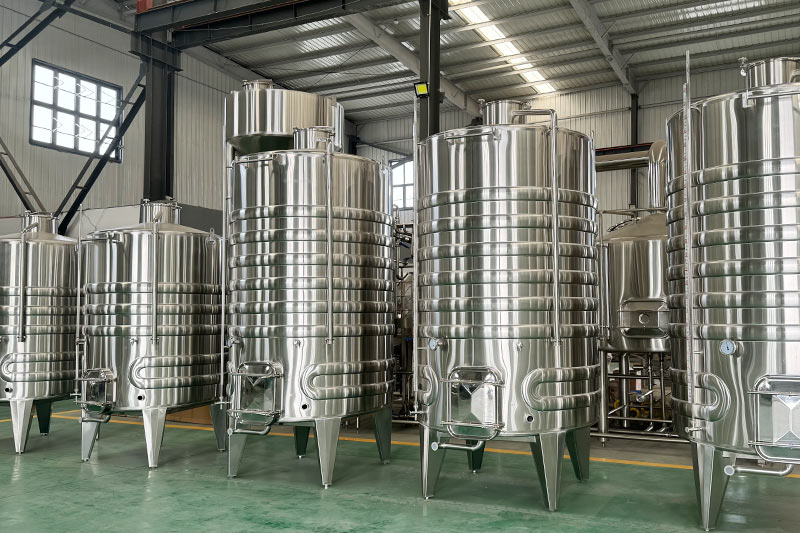
The most critical feature for fermentation is a means of temperature control. This is almost always a glycol jacket, which is a secondary wall or dimpled plating on the exterior of the tank through which a cooling liquid (glycol) can be circulated. This allows you to monitor and precisely control the temperature of the wine, which is vital for managing yeast health and achieving your desired aromatic profile. Without it, you risk stuck fermentations or the development of off-flavors.
Other essential features include:
- A Racking Arm: This swiveling outlet inside the tank allows you to drain the wine from above the settled solids.
- A Sample Valve: A small, hygienic tap that lets you take samples for analysis without having to open the tank.
- A Thermowell: A sealed tube that allows a thermometer probe to reach the wine and give an accurate reading of the temperature inside the tank.
- Quality Valves: All valves, especially the main drain valve at the bottom of the tank, should be high-quality, sanitary butterfly or ball valves that are easy to operate and clean.
- Pressure/Vacuum Relief Valve: A safety device on the top of the tank to protect it from over-pressurization or collapse during draining.
Can I Make Both Red Wine and White Wine in the Same Stainless Steel Tank?
Absolutely. The versatility to handle both red and white wine production is a key advantage of stainless steel tanks. Because the steel is inert and easy to sanitize, you can switch between wine types without any concern of carrying over flavors, colors, or tannins from one batch to the next, provided the tank is cleaned properly.
The winemaking process, however, differs. For white wine, you typically press the grapes and ferment only the juice in the tank. For red wine, you ferment the juice along with the grape skins, seeds, and sometimes stems to extract color, flavor, and tannin. This means a tank intended for red wine fermentation may benefit from a wider manway to make it easier to load the grape solids and to perform “punch-downs” (pushing the solid cap back down into the liquid).
A well-designed, multipurpose stainless wine tank can easily accommodate both. For example, after a red wine fermentation is complete and the wine and solids are removed, a thorough cleaning-in-place (CIP) procedure will render the tank perfectly neutral and ready for a delicate white wine. This flexibility is invaluable for wineries that produce a diverse portfolio of popular wine styles.
How Does Temperature Control in a Wine Tank Impact Fermentation?
Temperature control is arguably the single most important factor in a successful fermentation. The temperature inside the tank directly affects the metabolism of the yeast. If it gets too warm (typically above 85-90°F or 30-32°C for red wines), the yeast can become stressed and produce undesirable flavors or even die off, leading to a “stuck” fermentation. If it’s too cold, the yeast may become sluggish and the fermentation process will be slow and may not complete.
More subtly, temperature influences the aromatic and flavor profile of the finished wine. A cooler, slower fermentation (common for white wines) tends to preserve more of the delicate floral and fruity aromas from the grape. A warmer fermentation (often used for red wines) can help extract more color, flavor, and tannin from the grape skins.
This is why glycol jackets are so essential. They give the winemaker the power to guide the fermentation by precisely controlling the temperature of the wine. Whether you need to warm a tank to kick off a slow fermentation or cool it down to prevent it from running too hot, the ability to regulate the thermal environment is fundamental to modern, high-quality wine production. It’s a level of control that older methods of winemaking simply cannot offer.

What is the Maintenance and Cleaning Process for Stainless Steel Wine Tanks?
The ease of maintenance is a cornerstone of why stainless steel is the preferred material in the wine industry. A proper cleaning regimen ensures the longevity of the tank and, more importantly, protects your wine from contamination. The goal is to create a surface that is microbiologically stable.
The process typically involves a few key steps:
- Rinsing: Immediately after a tank is emptied, it should be thoroughly rinsed with water to remove all loose solids and residual wine.
- Cleaning: A caustic cleaning agent is circulated through the tank, often using a spray ball that reaches all interior surfaces of the tank wall. This step removes tartrate crystals, biofilms, and other organic matter.
- Rinsing Again: The tank is rinsed again with water to remove all traces of the cleaning agent.
- Sanitizing/Passivating: Before its next use, the tank is treated with a sanitizing agent (like a citric acid solution or peracetic acid) to kill any remaining microbes and to reinforce the passive layer on the stainless steel that protects it from corrosion.
Regularly inspecting gaskets, valves, and fittings is also part of the maintenance routine. Over time, these parts can wear out and create hiding spots for bacteria. As your equipment supplier, we provide guidance on best practices and can supply any replacement parts you need to keep your tanks in pristine condition.
How Do I Choose the Right Supplier for My Custom Stainless Wine Tanks?
Selecting the right supplier is as important as selecting the right tank. You aren’t just buying a piece of equipment; you are entering into a long-term relationship with a company that should serve as your partner in production. When evaluating a supplier, look beyond the initial tank costs and consider their experience, engineering capabilities, and commitment to service.
As a dedicated manufacturer of custom brewing and winemaking equipment, we believe the process should be collaborative. A great supplier will take the time to understand your specific needs, your winemaking style, and your facility’s constraints. They will ask questions: What are your production goals? What are your space limitations? What unique features do you need? From there, they should be able to design a tank that fits your operation perfectly.
Look for a supplier who can provide detailed technical drawings, who is transparent about the materials they use, and who has a portfolio of successful installations. Ask for references and inquire about their after-sales support. What happens if a valve needs replacing or if you need technical advice? Choosing a reputable manufacturer ensures you receive a high-quality, custom tank and a partner invested in your success. Our experience extends to all forms of beverage fermentation, including creating top-tier kombucha brewing equipment.
Frequently Asked Questions (FAQs)
What is the difference between 304 and 316 stainless steel for a wine tank?
304-grade stainless steel is the industry standard and is perfectly suitable for most wine applications. 316-grade steel contains an element called molybdenum, which provides superior resistance to corrosion, particularly from chlorides and acids. We recommend 316 steel for wineries that work with high-acid wines or use certain aggressive cleaning chemicals.
How long does a stainless steel wine tank last?
With proper care and maintenance, a high-quality stainless steel tank is a lifetime investment. It’s not uncommon to see tanks that are 30 or 40 years old still in active use in a cellar. Unlike an oak barrel, the tank itself does not degrade or lose its effectiveness over time.
What is a “variable capacity” tank and why would I need one?
A variable capacity tank, or floating lid tank, has a movable lid that can be set at different heights inside the tank, creating an airtight seal on the surface of the wine. This allows you to store smaller batches of wine in a larger tank without the risk of oxidation from the empty headspace, offering incredible flexibility for a winery.
Are stainless steel tanks only for fermentation?
No, they are incredibly versatile. Stainless steel tanks are used for fermentation, but also for post-fermentation settling (racking), short-term or long-term aging (especially for unoaked wines), cold stabilization, blending different lots of wine, and as storage tanks before bottling.
Can you customize a tank to fit in a specific or tight space?
Yes. As manufacturers, customization is one of our core strengths. We can design and build a custom tank to meet specific height or diameter constraints in your facility. We can adjust the placement of manways, valves, and other fittings to optimize the tank for your unique workflow.
How does the cost of a stainless steel tank compare to an oak barrel?
On a per-liter basis for a single use, a new French oak barrel is significantly more expensive than the equivalent volume in a stainless steel tank. While the upfront cost of a large tank is substantial, its longevity and reusability give it a much lower lifetime cost. The barrel must be replaced every few years to continue imparting its flavor, while the tank is a one-time purchase.
Key Takeaways for Your Winery
To make the best decision for your winemaking, remember these crucial points:
- Prioritize Control: Stainless steel offers unmatched control over flavor, hygiene, and temperature—the pillars of quality winemaking.
- Invest in Features: Don’t skimp on essential features like glycol jackets, racking arms, and quality sample valves. They pay for themselves in efficiency and wine quality.
- Size for Flexibility: Plan your tank capacity around your harvest yields, but incorporate variable capacity tanks to handle different batch sizes without risking oxidation.
- Think Long-Term: A stainless steel tank is a long-term asset. Its durability and low maintenance provide an excellent return on investment.
- Choose a Partner, Not Just a Product: Your equipment supplier should be a resource. We pride ourselves on offering not just tanks, but the expertise to help you design the perfect system for your needs, whether it’s for wine, cider, or even sophisticated distillery equipment.
Ready to explore the ideal stainless steel tank solution for your winery? We invite you to have a conversation with our engineering team. Let’s review your production goals and help you design a system that empowers you to create the best wine possible.