
Finding beer brewing tanks for sale is easy. Comparing them correctly is harder. Two tanks may look almost identical online, yet differ in cooling area, pressure design, fittings, weld quality, cleaning access, and usable volume. A vague RFQ can turn a low quotation into an expensive brewery problem.
For commercial buyers, the best brewing tanks are not simply the cheapest stainless vessels. Specify the required fermenter, brite tank, capacity in BBL, pressure rating, glycol jacket, sanitary fittings, CIP system, valves, insulation, documentation, and installation needs before comparing suppliers. A detailed RFQ helps you compare true value instead of headline price.
If you are starting a craft brewery, adding cellar capacity, or replacing old tanks, this guide will help you build a practical purchasing specification. We manufacture customized stainless steel brewery systems for global projects, so we will focus on the questions that matter before you approve a drawing or pay a deposit.
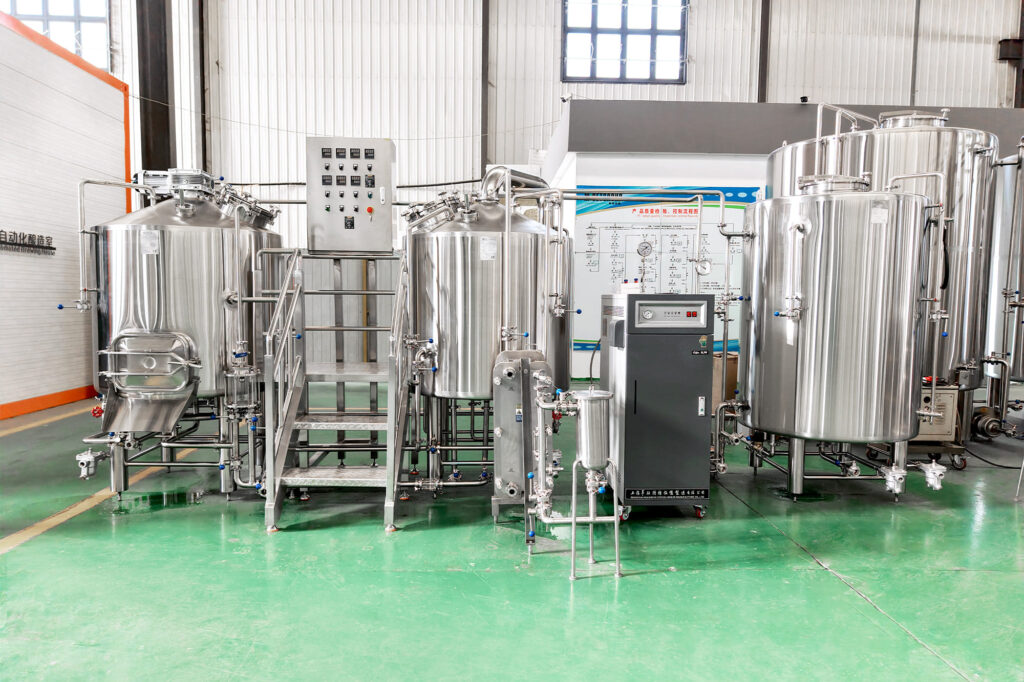
1. What Should You Verify Before Comparing Beer Brewing Tanks for Sale?
The first mistake is asking suppliers only for a price on “10 BBL tanks.”
That request leaves too many questions unanswered. Do you need a fermenter, a brite tank, a unitank, or simple storage tanks? Does 10 BBL mean nominal capacity or usable working volume? Does the quoted tank include a cooling jacket, insulation, pressure safety hardware, sanitary valves, CIP components, and shipping?
Before contacting a manufacturer, write down your process.
At minimum, define:
- Brewhouse batch size
- Annual production target
- Number of brews per week
- Ale, lager, or mixed beer program
- Average fermentation time
- Packaging method
- Required tank pressure
- Available ceiling height
- Door and freight access
- Glycol system capacity
- Local pressure-vessel requirements
- Planned expansion
A professional brewer should also think in tank-days, not just batch size. If one beer occupies a fermenter for 14 days and another remains in a tank for 28 days, they create very different cellar demands.
Procurement rule: Do not ask, “How much is a 10 BBL tank?” Ask, “What complete tank specification supports my production plan?”
That small change makes quotations far easier to compare.
2. Which Tank Do You Actually Need: Fermenter, Unitank, or Brite Tank?
A commercial cellar normally contains several vessel types. Each tank has a different job, so your RFQ should identify the function clearly.
| Tank Type | Main Function | Common Commercial Use |
|---|---|---|
| Conical fermenter | Primary fermentation | Ale, lager, craft beer |
| Unitank | Ferment, condition, sometimes carbonate | Flexible craft production |
| Brite tank | Clarify, carbonate, hold before packaging | Cans, bottles, kegs |
| Horizontal lager tank | Long cold conditioning | Lager programs |
| Storage tank | Hold processed liquid | Buffer or long-term holding |
| Mixing tank | Blending ingredients | Specialty beverage production |
A conical fermenter gives yeast and trub a controlled place to settle. A typical cylindrical-conical design may use a 60° conical bottom to support yeast collection and solids discharge, although actual geometry should match the manufacturer’s design and your process.
A unitank, sometimes described simply as a uni, combines several cold-side steps in one vessel. Modern unitank fermenters can reduce transfers because the beer may remain in the same tank through primary fermentation, conditioning, and sometimes carbonation.
A brite vessel works later in the process. The beer moves from the fermenter into the brite tank for clarification, final carbonation, holding, and packaging.
Do not buy every type just because it appears in a catalog. Your process should determine the tank mix.
3. How Many BBL Should Each Brewing Tank Hold?
Capacity looks simple until you calculate real production.
A 7 BBL brewhouse does not always require only 7 BBL cellar tanks. Some breweries double-batch into larger vessels. Others want every tank to match one brewhouse turn.
For example:
Illustrative Cellar Options
| Brewhouse | Fermenter Strategy | Best Fit |
|---|---|---|
| 7 BBL | 7 BBL fermenters | Flexible small batches |
| 7 BBL | 14–15 BBL fermenters | Double batching |
| 10 BBL | 10 BBL fermenters | One brew per fermenter |
| 10 BBL | 20 BBL fermenters | Higher output with double brewing |
A 10 BBL operation producing several seasonal beers may benefit from more individual tanks because each recipe can move on its own schedule. A production brewery focused on fewer high-volume brands may prefer larger vessels.
The real calculation is:
Required fermentation capacity ≈ weekly wort production × average tank occupancy ÷ 7
Suppose a brewery produces 30 BBL of wort per week and beer occupies the cellar for an average of 14 days:
30 × 14 ÷ 7 = 60 BBL of active fermentation capacity
You still need practical spare capacity for cleaning, delayed fermentation, seasonal peaks, and production changes.
This is why BBL batches and tank quantity should be planned together.
Simple Cellar Capacity Chart
Brewhouse Output       Cellar Demand
7 BBL/week             ███
15 BBL/week            ██████
30 BBL/week            ████████████
60 BBL/week            ████████████████████████
A tank that is too small restricts production. A tank that is too large may reduce flexibility. The best configuration balances throughput and SKU variety.
4. What Stainless Steel Construction Should a Commercial Fermenter Have?
Commercial beer equipment normally uses food-grade stainless steel because it offers good corrosion resistance, durability, and cleanability.
304 stainless steel is widely used for beer tanks. Some projects may specify another stainless grade based on process chemistry, local requirements, or customer preference.
But material grade alone does not prove tank quality.
Ask the supplier about:
- Material certification
- Plate thickness
- Internal finish
- Weld treatment
- Welding inspection
- Insulation
- External finish
- Tank pressure testing
- Surface cleaning and passivation
- Quality documentation
A polished photo does not tell you what is underneath the insulation.
When we manufacture stainless steel tanks, we pay special attention to product-contact surfaces, welds, ports, jackets, and drainage points because these areas affect both sanitation and long-term reliability.
For a stainless steel brewery, cleanability matters every day. A poorly placed fitting may collect product. A rough weld may make cleaning harder. A badly designed outlet can leave liquid behind.
Some tank suppliers describe a flush manway as a shadowless manway or offer a side manway door. The terminology matters less than the actual geometry. Ask for drawings showing how the manway connects to the vessel and whether the area drains and cleans properly.

5. How Should the Jacket, Glycol Cooling, and Temperature Control Be Specified?
Fermentation creates heat. That means a commercial fermenter needs reliable temperature control.
Most professional tanks use a cooling jacket supplied by a glycol loop. The jacket transfers heat from the beer to the cooling system so the brewery can maintain fermentation temperature and cold-crash when required.
A supplier may advertise a dimple jacket, but you should ask more detailed questions:
- How much jacket area is provided?
- How many jacket zones are installed?
- Where are the zones located?
- What glycol supply temperature is assumed?
- What is the expected cooling load?
- Are the jackets pressure tested?
- Are jacket inlet and outlet fittings included?
- Is insulation included?
A tall 15 BBL fermenter may require a different jacket arrangement from a short, wide vessel of similar volume.
Likewise, a BBL jacketed tank quote means little unless you know the cooling surface and design assumptions.
The tank cannot cool itself. Your chiller, pump capacity, piping size, glycol reservoir, and control system must support the entire cellar.
Why This Matters
Imagine eight tanks cold-crashing at the same time.
Even excellent jackets cannot perform well if the glycol system is undersized.
That is why we normally look at the complete brewery rather than treating every tank as an isolated item. The jacket, chiller, controller, probes, pumps, and piping all need to work as one cooling system.
6. What Pressure Rating, Valve, and Safety Hardware Should Be Documented?
Pressure specifications deserve careful attention.
A tank may be used for natural carbonation, pressure transfer, spunding, or forced carbonation. Those operations create stored energy, so buyers should never assume that every tank can safely operate at the same pressure.
If one supplier lists 14.5 psi and another lists 29 psi, do not simply choose the higher number.
Ask:
What does that number represent?
It could refer to:
- Maximum working pressure
- Design pressure
- Test pressure
- Recommended operating pressure
These are not interchangeable.
Your RFQ should request documented design and testing information along with the required safety hardware. Depending on the tank and jurisdiction, this may include a pressure relief valve, vacuum protection, a combined PVRV, PRV, or another approved pressure/vacuum safety arrangement.
A pressure gauge should have a suitable range for the vessel. A spunding valve may also be included when controlled natural pressure buildup is part of the brewing process.
Pressure safety is not paperwork for the filing cabinet. It affects daily operation.
The U.S. Occupational Safety and Health Administration has documented brewery incidents involving fermenter overpressure and recommends that vessel safe operating pressure be properly determined.
That gas needs a safe path out of the cellar.
7. Which Valves, Fittings, Manways, and CIP Components Belong in the RFQ?
Small accessories can create big quotation differences.
One supplier may quote a bare vessel. Another may include valves, temperature probes, a CIP spray device, adjustable feet, gauges, insulation, and controls.
Your comparison should therefore include the complete accessory list.
Typical Fermenter RFQ Checklist
- Product outlet valve
- Yeast dump valve
- Sample valve
- Racking arm
- CIP connection
- Spray device
- Temperature probe
- Thermowell
- Pressure gauge
- Pressure/vacuum protection
- Dry-hop port if required
- Manway
- Adjustable feet
- Gas connection
- Tri-clamp fittings
- Required gasket materials
A perlick-style sample valve or another sanitary sampling design can make routine gravity, pH, or sensory checks easier.
The racking arm helps draw clearer beer above settled solids. A well-positioned bottom drain helps empty the vessel during cleaning.
For cleaning, ask how the tank supports clean-in-place operation. A CIP system should reach product-contact surfaces and allow the brewery to circulate cleaning solutions safely.
Connections should also be easy to maintain. Operators should be able to disassemble removable fittings when inspection or gasket replacement is required.
For professional brewing, “all fittings included” is too vague.
Ask for every component to appear on the drawing or bill of materials.
8. How Do You Compare 7 BBL, 10 BBL, and 15 BBL Tank Quotations Fairly?
Price per tank is a poor comparison metric when the technical scope is different.
Suppose you receive three quotations:
| Item | Supplier A | Supplier B | Supplier C |
|---|---|---|---|
| Capacity | 10 BBL | 10 BBL | 10 BBL |
| Stainless grade | 304 | 304 | 304 |
| Jacket zones | 1 | 2 | 2 |
| Insulation | Included | Included | Included |
| CIP hardware | Basic | Included | Included |
| Sample valve | Extra | Included | Included |
| Pressure documentation | Limited | Included | Included |
| Shipping | Excluded | Excluded | Included |
They are all called 10 BBL fermenters, but they are not the same purchase.
Create a comparison sheet with these categories:
Vessel
- Working volume
- Total volume
- Headspace
- Diameter
- Overall height
- Cone geometry
Cooling
- Jacket quantity
- Jacket area
- Glycol design conditions
- Insulation
Pressure
- Design pressure
- Working pressure
- Test method
- Safety device
Accessories
- Valve quantity
- Sample port
- Racking arm
- CIP hardware
- Thermometer or sensor
- Manway
- Carbonation hardware
Commercial Terms
- Lead time
- Packaging
- Shipping
- Installation
- Commissioning
- Warranty
- Spare parts
- After-sales support
A low-price jacketed conical fermenter can become expensive when essential items appear later as options.
The same applies when comparing tanks for sale from different countries. Freight, import costs, installation support, spare-part availability, and documentation all affect the true project cost.
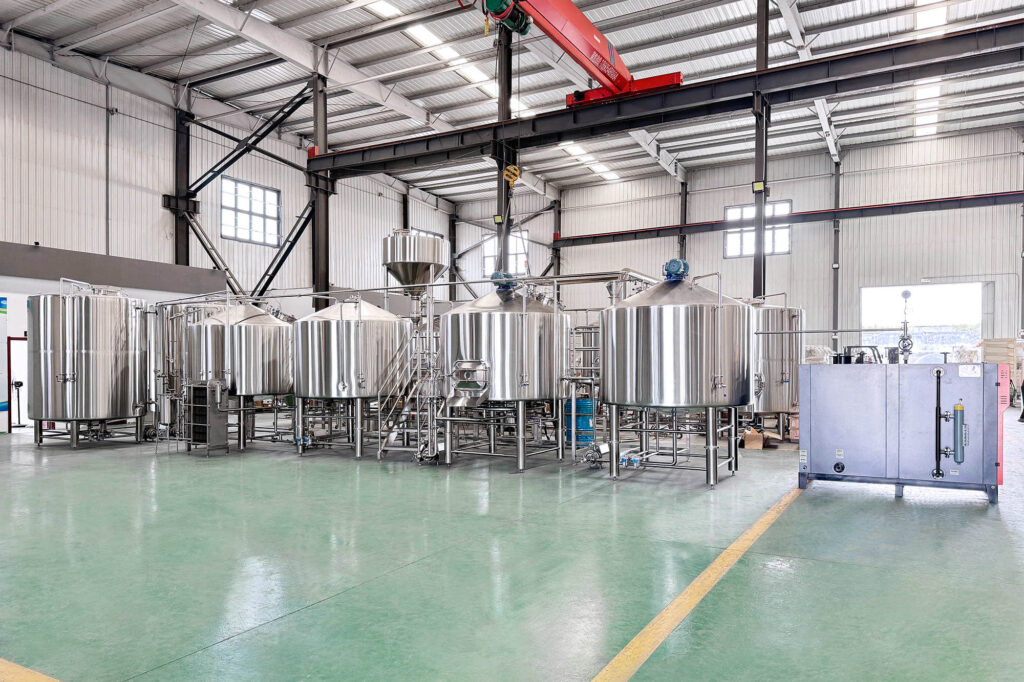
9. When Do Brite Tanks, Lager Tanks, and Storage Improve Brewery Throughput?
A fermenter should not become expensive beer storage.
If fermentation has finished but beer remains in the fermenter because packaging is not ready, that tank cannot accept new wort.
A dedicated jacketed brite tank can separate production from packaging. Beer can leave the fermenter, move to the brite tank, clarify, carbonate through a carbonation stone, and wait for a canning, bottling, or keg run.
That frees valuable fermentation capacity.
For lager breweries, lager tanks or horizontal lagering tanks may also make sense because beer can spend a long time conditioning.
Consider two simplified workflows:
Unitank-Heavy Cellar
Kettle → Fermenter/Unitank → Keg or Filling Line
Advantages:
- Fewer transfers
- Smaller equipment count
- Flexible for many craft breweries
Fermenter + Brite Workflow
Kettle → Fermenter → Brite → Keg / Can / Bottle
Advantages:
- Fermenters turn faster
- Packaging gets a dedicated buffer
- Carbonation can be standardized
- Better separation of cellar jobs
For long term storage, dedicated holding capacity may be more economical than keeping a high-value fermenter occupied.
A jacketed brite vessel can therefore improve throughput even though it does not increase brewhouse capacity.
That is the key idea: sometimes the best way to make more beer is not to buy a larger kettle. It is to remove the cellar bottleneck.
10. What Should You Ask a Brewery Tank Manufacturer Before Ordering?
By this stage, the tank drawing should be almost as important as the quotation.
A professional manufacturer should be able to discuss:
- Your beer styles
- Brewhouse batch size
- Annual production
- Fermentation schedule
- Packaging method
- Cellar dimensions
- Cooling requirements
- Local utilities
- Required documentation
- Future expansion
Ask to review general arrangement drawings before fabrication.
Check tank diameter, height, manway position, outlet orientation, jacket location, leg spacing, and service clearances.
If a tank is installed on a caster, confirm the load, operating condition, and whether the vessel is actually intended to move while full. Large commercial tanks normally require stable engineered support rather than casual mobility.
For a complete brewery project, the manufacturer should also consider how the brewery equipment works together. A fermenter does not operate alone. It connects to the brewhouse, glycol system, CIP equipment, pumps, hoses, gas system, and packaging line.
Factory QA Questions Worth Asking
- Can you provide material certificates?
- How are welds inspected?
- How is each pressure vessel tested?
- Are jackets tested separately?
- How is internal surface quality checked?
- Is a factory acceptance inspection available?
- What documentation ships with each tank?
- What spare parts are supplied?
- Who supports installation?
- What happens if a valve or fitting fails after commissioning?
For international projects, after-sales service matters even more. A heavy-duty tank may operate for many years, so drawings, spare seals, valves, and technical support should remain available after installation.
A Practical RFQ Template for Commercial Brewery Fermenters
Before contacting a supplier, you can prepare a short technical request like this:
| RFQ Item | Example Information to Provide |
|---|---|
| Brewery type | Craft brewery / brewpub / production brewery |
| Brewhouse size | 10 BBL |
| Tank required | Conical unitank |
| Quantity | 6 |
| Working capacity | Confirm with supplier |
| Material | 304 stainless steel |
| Product | Ale and lager |
| Cooling | Glycol jacket required |
| Pressure operation | Supplier to propose and document |
| Carbonation | Required / not required |
| CIP | Required |
| Sampling | Sanitary sample valve |
| Yeast collection | Required |
| Packaging | Keg + can |
| Facility height | Provide actual measurement |
| Destination | Country / port |
| Certification | State local requirement |
| Installation | Remote or onsite support |
This is far more useful than sending:
“Please quote six beer tanks.”
A clear RFQ saves time for both sides and reduces revision work later.
Illustrative Case: Why Tank Count Can Matter More Than Tank Size
Consider a hypothetical 10 BBL brewery with four fermenters.
The team wants to increase sales, so its first idea is to buy a larger brewhouse.
But the real problem is cellar occupancy.
Four tanks × 10 BBL = 40 BBL active capacity.
If each batch uses a tank for 14 days, the theoretical average turnover is:
40 BBL × 7 ÷ 14 = 20 BBL per week
The existing brewhouse may already be able to produce more than that.
Adding two more commercial brewery fermenters increases fermentation capacity to 60 BBL:
60 × 7 ÷ 14 = 30 BBL per week
That represents a 50% increase in theoretical cellar throughput without replacing the brewhouse.
This example is simplified, but the lesson is important:
Find the bottleneck before buying equipment.
Sometimes it is the brewhouse. Sometimes it is the fermenter count. Sometimes it is the brite vessel, the filling line, or the glycol cooling system.
Frequently Asked Question
What is the difference between a fermenter and a brite tank?
A fermenter provides the controlled environment where yeast converts fermentable sugars into alcohol and CO₂. A brite tank is normally used after primary fermentation for clarification, carbonation, holding, and preparation for packaging.
Some breweries use a conical unitank to perform several of these steps in one vessel.
How many fermenters does a 10 BBL brewery need?
There is no fixed number.
It depends on weekly brewing frequency, fermentation duration, beer styles, packaging schedule, and whether you double-batch. A brewery making four 10 BBL brews each week needs much more cellar capacity than one making one or two brews.
Calculate capacity using tank occupancy rather than choosing an arbitrary ratio.
Should I buy a brite tank if I already have unitanks?
Not always.
A small taproom may package directly from a unitank. A larger brewery may gain significant throughput by transferring finished beer to a dedicated brite vessel, which releases the unitank for the next batch.
The right answer depends on packaging volume and cellar scheduling.
What does a brewery tank glycol jacket do?
The jacket allows chilled glycol to circulate around part of the vessel wall and remove heat from the beer.
Good jacket design supports stable fermentation, controlled cold crashing, and reliable conditioning. Jacket area should be matched to tank geometry, process temperature, and cooling load.
What pressure rating should a beer fermenter have?
Use the rating required by your actual process and applicable local rules. Do not choose a vessel simply because another brewery uses the same pressure.
Ask the manufacturer to state design pressure, working pressure, test pressure, safety hardware, and supporting documentation clearly.
Is commercial stainless steel equipment better than homebrew equipment?
They serve different purposes.
Homebrew equipment works for small batches and recipe development. Commercial tanks must support repeated production, sanitary cleaning, temperature control, pressure management, larger volumes, and integration with pumps, utilities, and packaging.
Moving from home brewing to commercial production therefore requires more than simply buying a bigger vessel.
Final Buying Checklist
Before you approve a brewery tank order, remember:
- Define the process first. Know whether you need a fermenter, unitank, brite tank, lager vessel, or storage tank.
- Calculate BBL capacity based on tank occupancy, not just brewhouse size.
- Confirm the exact stainless grade, internal finish, weld quality, insulation, and construction details.
- Ask for cooling jacket area and glycol design assumptions rather than accepting “jacketed” as enough information.
- Make sure working pressure, design pressure, and test pressure are clearly separated.
- Verify the required valve, sample valve, racking arm, CIP hardware, gauges, safety devices, and fittings.
- Compare quotations line by line. Two tanks with the same capacity can have very different scopes.
- Look at your complete cellar. More fermentation tanks or brite capacity may improve output more than a larger brewhouse.
- Check factory QA, drawings, documentation, warranty, installation support, and spare-part availability.
- Plan future growth before the tanks are fabricated.
Buying beer brewing tanks is not just a stainless steel purchase. You are building the part of the brewery where product quality, production scheduling, cooling, cleaning, pressure control, and packaging all meet.
As a manufacturer of customized brewing systems, fermenters, brite tanks, and turnkey brewery equipment, we recommend starting every project with your production target rather than a catalog model number.
Share your batch size, annual production plan, beer styles, packaging method, available cellar dimensions, and future expansion target. From there, the tank quantity, size, cooling configuration, fittings, and brewery layout can be engineered around the way you actually plan to brew.